Mena Startup Sovra Raises $2m in Pre-Seed Funding
 By
Sam Reid
By
Sam Reid
Points
- Sovra, a self-custodial dollar account platform, raised $2m+ in pre-seed funding led by Pharsalus Capital, with angels including the founders of Ramp, Lean Technologies and 21shares.
- Founded by Ahmad Wehbi after Lebanon’s 2019 banking collapse, it lets users hold, grow, send and spend USDC-backed digital dollars that no bank can freeze.
- The funding will support product expansion ahead of a public launch, targeting MENA’s largely underbanked population.
Sovra, a fintech platform that gives people a dollar account they control entirely from their phone, has raised more than $2 million in pre-seed funding as it prepares for a public launch.
The round was led by Pharsalus Capital, with participation from a group of regional and global angel investors, including Karim Atiyeh (founder of Ramp), Hisham Al-Falih (founder of Lean Technologies), Hany Rashwan (founder of 21shares), and Naguib S. Sawiris (chairman of Orascom Development Holding AG).
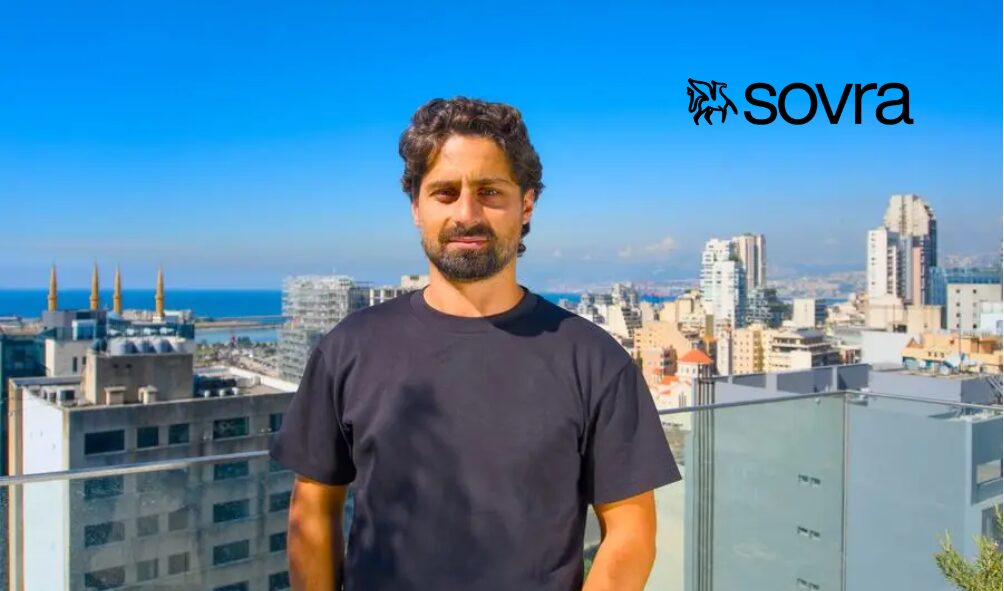
Sovra was founded in 2025 by Lebanese entrepreneur Ahmad Wehbi, who watched the country’s banking system collapse in 2019, when bank deposits were frozen and the Lebanese pound lost more than 98% of its value. That experience shaped the company’s core premise, that ordinary people need a way to hold money that no bank, government or intermediary can freeze or block.
The team draws on backgrounds across McKinsey, Revolut, Jumpcloud and decentralized finance, combined with first-hand experience of disrupted access to savings.
“There has always been something between people and their money; a bank, a border, a fee, a policy, a form,” said Wehbi, Sovra’s founder and CEO. “Sometimes it worked. Sometimes it took everything. The technology to remove the middleman now exists. Sovra is the simplest way in. Your money works for you and answers only to you. If we disappear tomorrow, it’s still there. That’s not a company policy alone, but the architecture we have built for Sovra.”
A Self-Custodial Dollar Account, Built for One App
Sovra packages a set of features that would normally require several separate providers into one mobile app. Users can hold digital dollars, earn yield on their balance, send money across borders in seconds, and spend through a card that works globally — all from a single self-custodial account.
That self-custody is the platform’s defining feature. Funds can only be accessed by the user, with no bank or intermediary able to freeze a balance or block a withdrawal. Sovra positions itself purely as infrastructure rather than a gatekeeper, guaranteeing both financial access and account longevity beyond the platform itself.
Dollar balances are held in USDC, a regulated stablecoin issued by Circle, an NYSE-listed, SEC-regulated company audited by Deloitte, with one real US dollar held in reserve for every digital dollar in circulation.
On top of that foundation, users can connect to third-party DeFi protocols for yield, send free transfers across accounts, and spend via a card supported on both the Visa and Mastercard networks. The platform also builds on Base, the blockchain network incubated by Coinbase, and uses lending protocol Morpho to power its savings and yield tools.
Together, the feature set is designed to cover the four things most people want from money: a safe place to keep it, a way to grow it, a way to move it, and a way to spend it — all without requiring users to understand the blockchain infrastructure underneath.
Targeting an Underbanked Region
Sovra’s pitch is aimed squarely at a gap in the region’s financial system. Roughly two-thirds of adults across MENA remain unbanked or underbanked, and even those with bank accounts can face inflation, currency devaluation, withdrawal limits, and the risk of losing access to their own savings. Remittances across the region are often slow and expensive too, with fees exceeding 6% per transfer and transfers taking days to settle.
The company is initially targeting three segments: young professionals across MENA, university students, and the regional diaspora globally. Sovra is incorporated in Delaware and operates with a distributed team across the Middle East and Europe, including offices in Lebanon and the UAE.
“By giving people sovereign, self-custodial alternatives to fragile fiat and banking systems, Sovra is helping restore financial dignity in Lebanon and beyond,” said Anthony Ghosn, Managing Director at Pharsalus Capital. “For those of us with ties to the region, these issues are deeply familiar — and Ahmad and the Sovra team stand out for having the courage and clarity to build where others have been constrained by the scale of the problem.”
The pre-seed funding will go toward engineering and product expansion as Sovra builds out its platform ahead of a public launch.
Share this article!


Recent News
Meta’s Muse Sends Shares Up 11% as Investors Finally See the AI Payoff
Flowdesk Secures Full VARA Broker-Dealer Licence In Dubai
Commercial Bank of Dubai Launches CBD Invest, Bringing Wealth Management into its Banking App
Featured
No reviews found.
No reviews found.



No reviews found.
No reviews found.