What Is Margin in Forex and How It Works
 Sam Reid · Senior Financial Markets Analyst
Staff Writer
Sam Reid · Senior Financial Markets Analyst
Staff Writer  22nd Jan 2026
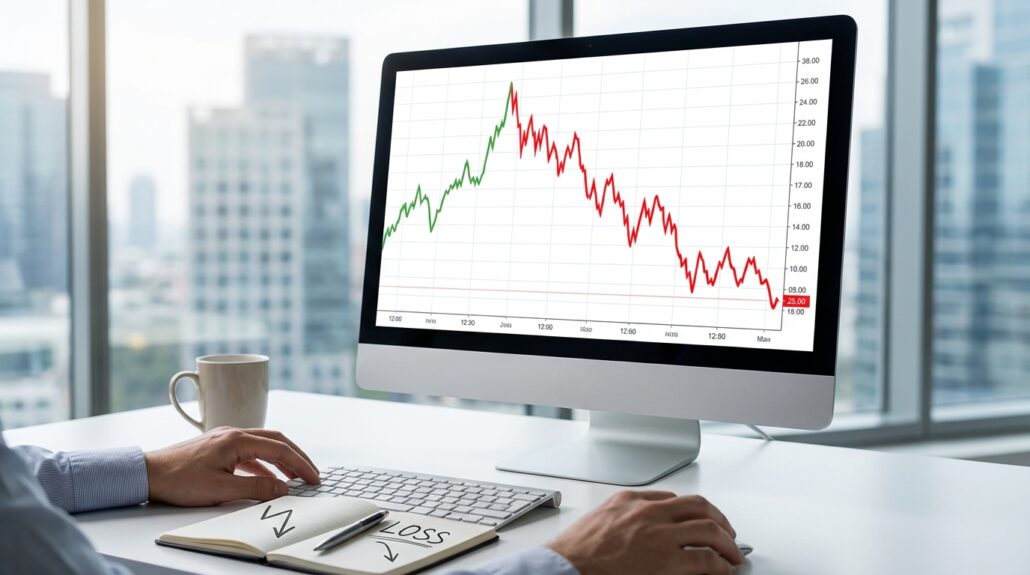
A single trade can wipe out thousands from one’s account. The position looked solid, the analysis checked out, and many think they’ve done everything right – except they didn’t truly understand what margin in forex actually meant. Many usually confuse “available funds” with “safe to risk,” and the market teaches an expensive lesson about the difference.
Here’s what takes years and several painful losses to learn: margin isn’t just a number on your trading platform. It’s the mechanism that allows you to control $100,000 worth of currency with just $1,000 in your account. That’s incredible power, but it cuts both ways. The same feature that amplifies your winning trades by 100x does the exact same thing to your losers.
Most explanations of forex margin read like textbook definitions that miss what actually matters to traders. They’ll tell you margin is “collateral” or a “good faith deposit” without explaining why your broker just closed your position at the worst possible moment, or why your account balance dropped faster than the market actually moved.
Understanding margin mechanics separates traders who survive their first year from those who blow their accounts within months. The concepts aren’t complicated once you see how they connect, but the consequences of misunderstanding them are brutal and immediate. Let’s break down exactly how margin works, why it matters, and how to use it without letting it destroy your trading capital.
Defining Forex Margin and Leverage
Margin in forex represents the minimum capital your broker requires you to hold as security before opening a position. Think of it as a reservation deposit at a restaurant: you’re not paying for the entire meal upfront, but you’re proving you have skin in the game.
When you open a forex trade, you’re not buying or selling actual currencies. You’re entering a contract that profits or loses based on price movements. Your broker provides the bulk of the capital needed to control these positions, while you provide a fraction as collateral.
The Relationship Between Margin and Leverage
Leverage and margin are two sides of the same coin, expressed differently. If your broker offers 50:1 leverage, you need 2% margin. At 100:1 leverage, you need just 1% margin. The math is straightforward: divide 100 by the leverage ratio to get your margin percentage.
- 50:1 leverage = 2% margin requirement
- 100:1 leverage = 1% margin requirement
- 200:1 leverage = 0.5% margin requirement
- 500:1 leverage = 0.2% margin requirement
Higher leverage means smaller margin requirements, which sounds attractive until you realize what it actually enables. With 500:1 leverage, a 0.2% market move against you wipes out your entire margin. That’s roughly 20 pips on most major currency pairs, which can happen in minutes during volatile sessions.
Margin as a Good Faith Deposit
Your margin deposit doesn’t actually purchase anything. It sits in your account as collateral, locked until you close your position. If your trade moves profitably, you keep your margin plus the gains. If it moves against you, your losses come out of your remaining account balance first.
The “good faith” terminology matters because it reflects the trust relationship between you and your broker. They’re lending you significant buying power based on your deposited funds. In return, they reserve the right to close your positions if your account value drops too low to cover potential losses. This protection exists for both parties: it prevents you from owing more than you deposited and protects brokers from client defaults.
Key Margin Terminology Every Trader Must Know
Your trading platform displays several margin-related figures that change constantly while positions are open. Misreading these numbers leads directly to unexpected margin calls and forced position closures.
Used Margin vs. Free Margin
Used margin represents the total collateral currently locked in your open positions. If you have three trades open requiring $500, $300, and $200 respectively, your used margin equals $1,000.
Free margin is what remains available for new trades or to absorb losses. Calculate it by subtracting used margin from your equity. With $5,000 equity and $1,000 used margin, you have $4,000 free margin.
The critical insight here: free margin fluctuates constantly based on your unrealized profits and losses. A winning position increases your free margin because it adds to equity. A losing position decreases free margin, potentially triggering a margin call even if you haven’t opened any new trades.
Understanding the Margin Level Percentage
Margin level is the most important number on your platform, calculated as equity divided by used margin, expressed as a percentage. This single figure determines whether your broker intervenes in your trading.
- Margin level above 100%: Your equity exceeds your margin requirements. You’re operating normally.
- Margin level at 100%: Your equity exactly equals your used margin. Free margin is zero.
- Margin level below 100%: Your equity is less than required margin. Danger zone.
Most brokers set margin call levels between 50% and 100%, with stop-out levels between 20% and 50%. These thresholds vary significantly between brokers, so check yours before trading.
Equity and Floating Profits or Losses
Equity represents your account’s real-time value: your balance plus or minus any unrealized gains or losses from open positions. Unlike balance, which only changes when you close trades, equity moves with every tick of the market.
This distinction trips up many traders. Your balance might show $10,000, but if you’re holding a position that’s currently down $3,000, your equity is $7,000. All margin calculations use equity, not balance. That $3,000 floating loss directly reduces your margin level and available free margin, even though you haven’t technically “lost” anything yet.
How Margin Requirements Are Calculated
Margin requirements aren’t arbitrary numbers. They reflect specific risk factors that vary by currency pair, position size, and market conditions.
Currency Pair Volatility and Margin Rates
Brokers adjust margin requirements based on how much a currency pair typically moves. Major pairs like EUR/USD or USD/JPY usually require 2-3% margin because they’re highly liquid and relatively stable. Exotic pairs involving emerging market currencies might require 5-10% margin due to their tendency for larger price swings.
Several factors influence these rates:
- Historical volatility measurements
- Liquidity during different trading sessions
- Economic calendar events approaching
- Regulatory requirements in your jurisdiction
- Your account type and trading history
Some brokers increase margin requirements before major news events like central bank announcements or employment reports. A pair that normally requires 2% margin might temporarily require 5% during high-impact releases. Check your broker’s policies on dynamic margin adjustments.
The Impact of Lot Size on Required Margin
Position size directly scales your margin requirement. One standard lot in forex represents 100,000 units of the base currency. At 2% margin, controlling one standard lot of EUR/USD requires $2,000 margin when EUR/USD trades near parity.
The calculation follows a simple formula: position size multiplied by margin percentage multiplied by exchange rate. For a mini lot of 10,000 units at 2% margin, you need $200. For a micro lot of 1,000 units, just $20.
This scaling creates a temptation to trade larger positions than appropriate. Having $5,000 in your account technically allows you to open positions requiring $4,000 in margin, leaving only $1,000 to absorb losses. That’s a recipe for rapid account destruction. Conservative traders rarely use more than 10-20% of their available margin on any single trade.
Managing Risks: Margin Calls and Stop Outs
Margin calls and stop-outs represent your broker’s risk management system activating. Understanding exactly when and how these events occur helps you avoid them entirely.
What Happens During a Margin Call
A margin call occurs when your margin level drops below your broker’s specified threshold, typically 50-100%. The name comes from the days when brokers would literally call traders on the phone to demand additional deposits.
Modern margin calls are usually automated notifications. Your platform displays warnings, sends emails, or pushes alerts to your phone. At this stage, you have options:
- Deposit additional funds to increase equity
- Close some positions to reduce used margin
- Hope the market reverses and increases your equity
That third option is what gets traders into trouble. A margin call is a warning, not an action. Your positions remain open, and if the market continues moving against you, the next stage arrives: the stop-out.
The Mechanics of an Automatic Stop Out
Stop-out is when your broker forcibly closes positions because your margin level dropped below the stop-out threshold, often 20-50%. You don’t get a choice here. The broker’s system automatically liquidates positions to protect both parties from further losses.
Most brokers close your largest losing position first, then continue closing positions until your margin level recovers above the stop-out threshold. This process can happen extremely fast during volatile markets, sometimes closing multiple positions within seconds.
The worst part: stop-outs often occur at the worst possible prices. If the market is moving quickly against you, the execution price on your forced closure might be significantly worse than the price that triggered the stop-out. This slippage can turn a bad situation into a devastating one.
Best Practices for Effective Margin Management
Surviving as a forex trader requires treating margin as a limited resource that demands careful allocation. The traders who last aren’t necessarily the smartest analysts; they’re the ones who never put themselves in positions where a single bad trade destroys their account.
Using Stop-Loss Orders to Protect Equity
Stop-loss orders are your primary defense against margin calls. By defining your maximum acceptable loss before entering a trade, you ensure that losing positions close at predetermined levels rather than wherever the market happens to be when your margin runs out.
Effective stop-loss placement considers several factors. First, calculate the dollar amount you’re willing to lose, typically 1-2% of your account per trade. Then work backward to determine appropriate position size and stop distance. If you have $10,000 and risk 1% per trade, your maximum loss is $100. A 50-pip stop-loss on a mini lot risks roughly $50, keeping you well within limits.
Place stops at technically significant levels where your trade thesis becomes invalid, not at arbitrary distances. A stop-loss 30 pips away that sits in the middle of nowhere gets hit by normal market noise. A stop-loss at the same distance that sits below a clear support level has a reason to exist.
Avoiding Over-Leveraging Your Account
The single biggest margin management mistake is using too much available leverage. Just because your broker offers 100:1 leverage doesn’t mean you should use it. Professional traders typically use effective leverage of 10:1 or less, even when much higher ratios are available.
Consider this scenario: with $10,000 and 100:1 leverage, you could theoretically control $1,000,000 in positions. A 1% move against you equals $10,000, wiping out your entire account. With 10:1 effective leverage controlling $100,000, that same 1% move costs $1,000, a painful but survivable 10% account drawdown.
Build a personal rule: never use more than 20-30% of your available margin, regardless of how confident you feel about a trade. This buffer protects against unexpected volatility, gap openings, and the inevitable losing streaks that every trader experiences.
Putting Margin Knowledge Into Practice
Understanding what margin means in forex trading transforms how you approach every position. The mechanics aren’t complicated: you’re posting collateral to control larger positions, and your broker monitors your equity to ensure you can cover potential losses.
The practical application requires discipline. Calculate your margin requirements before entering trades, not after. Monitor your margin level throughout the trading day, especially during volatile sessions. Set stop-losses that protect your equity rather than hoping losing trades will reverse.
Most importantly, treat leverage as a tool that demands respect rather than a feature to maximize. The traders who blow their accounts aren’t usually wrong about market direction; they’re wrong about position sizing. They let margin requirements dictate their trading size instead of letting risk management dictate their margin usage.
Start with lower leverage than you think you need. Build your account gradually through consistent, properly-sized trades. The market will always be there tomorrow, but only if you still have capital to trade with.
Disclaimer: This content is for educational purposes only and not to be construed as investment advice. Remember that forex and CFD trading involves high risk. Always do your own research and never invest what you cannot afford to lose.