Is XAUUSD Difficult to Trade? What Makes Gold Hard, and How to Handle It
 By
Sam Reid
By
Sam Reid

Is XAUUSD difficult to trade? Yes, more so than a typical forex pair, but the difficulty is specific and fixable rather than mysterious. Gold’s price swings are several times larger than those of major currency pairs, which means the same lot size that feels safe on EUR/USD can wipe out an account on gold. Once you understand why gold moves the way it does and size your trades to match, it becomes far more approachable. This guide explains what makes gold hard, and the practical habits that make it tradable.
Understanding XAUUSD
The gold versus US dollar pair, XAU/USD, is one of the most traded assets in the world. It shows how many US dollars it takes to buy one ounce of gold. Because gold is both a commodity and a monetary benchmark, its price reacts to inflation data, central-bank actions, and global uncertainty all at once.
What makes gold both fascinating and demanding is that it often moves differently from other forex pairs. When traders pull money out of risky assets, they tend to buy gold, pushing it higher. When confidence returns, gold can drop sharply. Reading that rhythm of fear and optimism is central to trading it well.
The Real Measure of Gold’s Difficulty
Most guides call gold “volatile” without saying what that means in numbers. The comparison below puts it in context.
| Instrument | Typical daily range | On major news |
|---|---|---|
| XAUUSD (gold) | 200 to 500+ pips | Can exceed 1,000 pips; $100 moves in seconds |
| EUR/USD | 50 to 80 pips | Around 50 pips on a similar surprise |
Gold can hand you 500 pips in a day, and it can take 500 pips back in five minutes. That’s the whole reason beginners blow up on it. A position size that’s comfortable on a currency pair becomes dangerous on gold, because the same number of lots is exposed to several times the movement. The difficulty is less about unpredictability and more about scale: gold is simply bigger, and traders forget to shrink their positions to match.
Why Gold Moves the Way It Does
Gold is a global sentiment gauge
Unlike currency pairs that react mostly to scheduled data, gold responds to global emotion. Fear of inflation, conflict, or financial stress can send it spiking, while renewed confidence can push it lower. During 2024, central banks bought over 1,045 tonnes of gold, according to the World Gold Council, which underlines its role as a hedge and helps drive the surges and short-term swings that define the pair.
The US dollar connection
Gold and the dollar usually move in opposite directions. A stronger dollar tends to push gold down, and a weaker dollar tends to lift it. This is why traders watch Federal Reserve statements and US inflation figures so closely. When rate cuts look likely, gold often rises as investors expect weaker returns on dollar assets.
Volatility and liquidity
Gold is among the most liquid instruments in the world, so execution is fast, but the volatility that comes with it is intense. Prices can swing several dollars within minutes during busy sessions like the London and New York overlap. That movement is the appeal, yet uncontrolled leverage turns it against you quickly. A clear risk plan, such as limiting exposure to 1 to 2% of your account per trade, is the foundation of trading gold for the long term.
Position Sizing
If gold has one make-or-break skill, this is it. Because gold moves so far in dollar terms, your lot size matters more here than on any currency pair, and the pip value is what makes that concrete.
| Lot size | Value per pip (XAUUSD) |
|---|---|
| Standard lot (1.0) | $10 per pip |
| Mini lot (0.1) | $1 per pip |
| Micro lot (0.01) | $0.10 per pip |
Put that together with gold’s daily range and the risk becomes obvious. A standard lot at 10 dollars per pip, exposed to a 300-pip day, is a 3,000-dollar swing. On a small account, one normal gold move can breach your limits before you’ve done anything wrong. This is exactly why experienced gold traders use smaller lot sizes and wider stops than they would on a currency pair.
The practical fix is to size every trade from your risk. Decide the percentage of your account you’re willing to lose, measure the distance to your stop-loss in pips, and work backwards to the lot size that keeps the loss within that limit. A gold lot size calculator does this arithmetic for you in seconds: you enter your account balance, your risk percentage, and your stop distance, and it returns the correct lot size for that specific trade. Used before every position, it removes the single most common way beginners lose money on gold, trading too large for the range.
Key Factors That Move Gold
Inflation and interest rates
When inflation rises, investors often turn to gold for protection. But when central banks raise rates aggressively, gold can fall as higher bond yields compete for that money. Tracking inflation trends and monetary policy gives you early signals of a possible shift in direction.
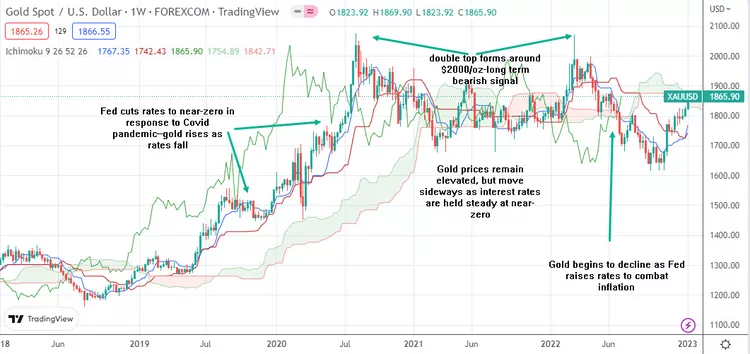
Interest rate effect on gold. (TradingView)
Central-bank activity
Central-bank gold buying moves sentiment. When countries diversify away from the dollar, demand for gold rises. Traders who follow these flows can better anticipate momentum in XAUUSD.
Geopolitical risk
Wars, elections, and sanctions can trigger rapid surges in gold. The Russia–Ukraine conflict in 2022 set off one of the decade’s strongest rallies. These events create opportunity but sharpen the risk, which calls for tighter stop losses and disciplined management.
Industrial and jewellery demand
Beyond its safe-haven role, gold serves real industries. Rising jewellery and electronics demand can lift prices even in calm markets, so understanding seasonal and regional patterns helps you spot longer-term trends.
So, Is XAUUSD Hard to Trade?
Yes at first, but for a reason you can address. Gold is pulled by many forces at once, currencies, global events, and sentiment, and beginners often find it unpredictable because price tends to overshoot before it settles. Once you understand those dynamics and, above all, size your positions to match gold’s range, that same volatility becomes something you can work with rather than fear.
The essentials are simple to state and hard to keep:
- Avoid excessive leverage.
- Size every position from your risk, using a calculator until it becomes second nature.
- Use clear entry and exit plans.
- Treat volatility as normal, not as a surprise.
- Rely on disciplined money management above everything else.
Best Hours to Trade XAU/USD
Gold trades 24 hours a day from Monday to Friday, but activity is uneven. The London and New York overlap, roughly 1 PM to 4 PM GMT, is the most active window, with tighter spreads and faster fills. Asian sessions are quieter, which can suit traders who prefer calmer price action, though lower liquidity there means wider spreads and the odd price gap.
Practical Strategies for Gold Traders
Trend-following
Find the prevailing direction and trade with it. Moving averages and trend lines help confirm it. If gold keeps making higher highs, look for pullbacks to buy; if lower lows dominate, look for opportunities to sell.
Breakout trading
When price pushes beyond clear support or resistance, strong momentum can follow. Waiting for a confirmation candle or a volume spike reduces false signals, and stops usually sit just outside the breakout zone.
RSI and Fibonacci confirmation
Indicators like RSI and Fibonacci retracements can help confirm turning points. When gold retraces to the 50% Fibonacci level while RSI climbs out of oversold territory, some traders read it as a possible buying setup. Use these as part of a wider plan rather than on their own.
Risk management first
Gold’s volatility demands firm control of your capital. Always use stop-losses, keep position sizes modest, and hold your emotions steady. Even experienced traders lose money without discipline, and lasting results come from protecting the downside rather than chasing every rally.
Choosing a Gold Broker in the UAE
For traders in the GCC, the platform behind your trades matters. When comparing gold trading brokers in the UAE, weigh a few things that directly affect your results: tight and stable spreads on XAUUSD, since a wide gold spread eats into every trade; fast, reliable execution during volatile sessions; local deposit and withdrawal options that work from a UAE bank; and a genuine swap-free Islamic account if Sharia compliance matters to you.
Before committing, confirm the broker’s regulation, its account types, and how its gold spreads behave during news, rather than trusting a headline number. A well-regulated broker with consistent gold pricing is worth more than one advertising the lowest spread but widening it when the market moves.
Frequently Asked Questions
Why is XAUUSD hard to trade?
Gold is far more volatile than most currency pairs, moving 200 to 500 or more pips a day against 50 to 80 for EUR/USD, and it reacts sharply to geopolitics and sentiment. That larger range means position sizing and risk control matter more on gold than on almost any other pair, and it’s the main reason beginners struggle.
Is trading XAUUSD better than forex pairs?
Gold often moves independently of major currencies, which adds diversification, and its larger range offers more opportunity. That same range raises the risk, so it demands more careful position sizing than a typical forex pair. Better depends on your discipline more than on the instrument.
Is trading XAUUSD good for beginners?
Yes, but only with practice and strict risk management. Beginners should start on a demo account or with micro lots to learn how gold behaves before adding leverage, and should size positions with a calculator rather than by feel. Gold rewards discipline over speed.
How do I size a gold trade correctly?
Decide how much of your account you’re willing to risk on the trade, measure your stop-loss distance in pips, and work backwards to a lot size that keeps the loss within that limit. A gold lot size calculator does this instantly, and using it before every trade prevents the oversizing that ends most beginner accounts.
How to successfully trade XAUUSD?
Trade with the trend, use support and resistance, watch US dollar data and interest rates, and always apply stop-losses. Size each position from your risk, avoid emotional decisions, and enter only when your setup criteria are met.
How much money do you need to trade XAUUSD?
Some brokers allow trading from 100 to 500 US dollars using micro lots of 0.01. Starting small lets you learn position sizing and margin management while keeping potential losses contained, which matters more on gold than on gentler pairs.
Sources
- World Gold Council – Gold Demand Trends, Central Banks (2024 central-bank gold purchases)
Share this article!


Recent News
How to Compare Trading Platforms When You Are Based in the Gulf: Costs, Regulation and Access to UK and US Markets
How to check your credit score in the UAE
How Many Free Zones in Dubai? and Why It Barely Matters

Featured
No reviews found.
No reviews found.



No reviews found.
No reviews found.