Startup Pre Seed Funding in UAE: How Much You Need, and Whether to Raise It at All
 By
Sam Reid
By
Sam Reid
The Short Answer
Startup pre seed funding in UAE rounds typically lands somewhere between $50K and $500K, with angel cheques commonly in the AED 100K to AED 2M range, and founders giving up 10% to 20% equity. Here’s the uncomfortable part that’s rarely mentioned: that range often doesn’t cover what two founders actually burn in Dubai over 18 months.
Which means the real question isn’t “how do I raise pre-seed?” It’s these three, in order:
- How much do you actually need? A lean two-founder team needs roughly AED 430,000 to AED 500,000 for 18 months. A realistic, non-survival-mode budget is closer to AED 630,000 to AED 1M. Validating an idea, though, can cost under AED 40,000.
- Do you need to raise at all? If you can bill customers within six months and your build is capital-light, raising is often the more expensive path.
- When do you start? When six to nine months of runway remain. A well-prepared UAE round takes four to six months to close. An unprepared one takes six to twelve, or fails.
The rest of this guide does the arithmetic, with sources.
What Pre-Seed Actually Looks Like in the UAE
The capital is real. Over USD 3 billion is invested annually across MENA by venture capital and private equity, with the UAE accounting for the largest share of deal activity, according to Corvian Advisory’s UAE fundraising guide, citing MAGNiTT data. Note the framing: annual, regional, and inclusive of PE. Single-quarter UAE funding figures swing wildly and are a poor basis for planning.
Realistic pre-seed benchmarks
| Metric | Typical UAE range |
|---|---|
| Pre-seed round size | $50K to $500K |
| Angel cheque size | AED 100K to AED 2M |
| Seed VC cheque | USD 500K to $2M |
| Equity given up (pre-seed and seed) | 10% to 20% |
| Typical pre-money valuation | ~$2M to $6M, occasionally to $8M with a strong team or traction |
| Friends and family round | AED 50,000 to AED 200,000 |
| Time to close a round | 4 to 6 months (well prepared); 6 to 12 months (not) |
A word on valuation numbers you see online
Be sceptical of any source quoting a very precise “average UAE pre-seed valuation.” There is no reliable public dataset supporting a figure to one decimal place. For pre-revenue startups, valuation is more art than science: investors use qualitative frameworks like Scorecard and Berkus, anchored to recent comparable MENA transactions. The primary drivers are team credibility, market size, and defensibility. As a further reality check, UAE seed and Series A pre-money valuations tend to run meaningfully below comparable US benchmarks on similar traction.
One structural fact worth internalising: there is a validation threshold in this market. Institutional money rarely backs a raw idea, and regional VCs frequently won’t review a deck without a warm introduction.
How Much Money Do You Actually Need to Start Your Startup?
This is the question every competing guide skips. Here it is with real numbers.
The costs you can’t avoid
Unlike markets where you can trade as a sole operator for nothing, the UAE requires a licence before you legally do business, so registering your company is step 1. That creates a hard cost floor before you spend a dirham on product.
The UAE has more than 40 free zones, and per the Ministry of Economy and Tourism, entities in free zones are governed by the rules of their respective free zone authority. Fees and requirements genuinely vary by zone, so treat the figures below as planning ranges and confirm with the authority you choose.
- Free zone licence (zero visa): roughly AED 5,500 to AED 12,000 per year, depending on the zone and activity
- Residence visa, per person: roughly AED 3,000 to AED 7,000, including medical, Emirates ID, and stamping
- Realistic year-one, one-person free zone company, all in: roughly AED 13,000 to AED 35,000
- Bank minimum balance: commonly AED 25,000 to AED 50,000 at traditional banks, though several digital banks require little or none. This isn’t spent, but it is capital you cannot deploy.
- Accounting and corporate tax compliance: roughly AED 3,000 to AED 8,000 per year. Corporate tax registration is required regardless of profit, and the Federal Tax Authority applies penalties for late or failed registration, so confirm current FTA guidance for your entity type.
Three realistic budget tiers
Tier 1: Validation only, AED 25,000 to AED 40,000
You’re still employed or freelancing. You set up a basic entity, pay for tools, and test whether anyone actually wants this. No salary. This is a one-off cost, not a monthly burn, and it’s how most sensible founders begin. If you can’t put your hands on AED 30,000, you’re almost certainly not ready to raise a round either.
Tier 2: One full-time founder, 12 months, roughly AED 200,000 to AED 250,000
You’ve quit. Entity, visa, and compliance run around AED 30,000. The rest is you. A founder living modestly in Dubai spends roughly AED 10,000 to AED 15,000 a month, plus tools and basic marketing. This is the “prove it works” budget.
Tier 3: Two founders, 18 months
Here’s where founders deceive themselves. Two scenarios:
Lean baseline (survival mode)
| Line item | Monthly (AED) |
|---|---|
| Two founders, bare-minimum living | 20,000 – 24,000 |
| Software, hosting, tools | 1,500 |
| Compliance and accounting (amortised) | 700 |
| Marketing, sales, miscellaneous | 2,000 |
| Total monthly burn | ~24,000 – 28,000 |
18 months: roughly AED 430,000 to AED 500,000 (about $117K to $136K).
This is genuinely lean. It assumes two founders living frugally in one of the world’s more expensive cities, no hires, and minimal spend on growth.
Realistic budget (sustainable for 18 months)
Dubai and Abu Dhabi are expensive. Housing, and the cost of internationally competitive talent, burn through a pre-seed runway quickly. A more honest monthly figure for two founders with a modest lifestyle, a real product, and some growth spend is AED 35,000 to AED 60,000 a month, which over 18 months is AED 630,000 to AED 1.08M (about $172K to $294K). Add a contract developer or a first hire and you’re at the top of that range.
The gap nobody mentions
Now compare those figures with the pre-seed range at the top of this article: $50K to $500K.
A realistic 18-month, two-founder budget in Dubai frequently exceeds what a typical UAE pre-seed round delivers. That’s not a reason for despair. It’s a reason to plan properly, because it means your genuine options are:
- Stay lean, deliberately and with your eyes open
- Stay part-time longer, and validate before you quit
- Combine sources: savings, plus angels, plus a non-dilutive grant
- Generate some early revenue to stretch the round
- Raise at the top of the range, which requires proof most pre-seed founders don’t yet have
What is not a viable option is raising AED 300,000 against an AED 50,000 monthly burn and hoping. That’s a six-month runway with a four-to-six-month raise attached to the end of it.
Should You Raise Pre-Seed Funding or Bootstrap Your Startup?
Raising money is not a milestone. It’s a transaction, and the price is permanent ownership.
Bootstrap if most of these are true
- You can bill customers within six months. Services, consulting, agencies, and many e-commerce models fund themselves.
- Your build is capital-light. If the MVP is a few months of your own work, outside money mostly buys convenience.
- Your market isn’t winner-take-all. No land grab means no reason to burn cash to be first.
- You want control. No board, no investor updates, no obligation to chase a venture-scale outcome you may not want.
- You haven’t validated demand. Raising to find product-market fit is expensive. Find it, then raise to scale it.
Raise if most of these are true
- There’s a long build before revenue. Deep tech, regulated fintech, and hardware can’t bootstrap through an 18-month build.
- Your model needs scale to work at all. Marketplaces need liquidity on both sides before they need anything else.
- You’re in a genuine race. If a funded competitor takes the market while you grow slowly, speed is worth the dilution.
- You must hire before you can earn. Some products cannot be built by two people.
- You’re in a venture-backable category. Fintech, e-commerce, healthtech, logistics, and edtech dominate UAE deal flow. Deep tech and biotech remain comparatively undercapitalised here. Plenty of good businesses aren’t venture-backable, and that’s fine.
The middle path most founders miss
Bootstrap to validation, then raise. Fund the first AED 30,000 to AED 50,000 yourself, prove people will pay, then raise on evidence rather than hope. You’ll raise faster, at a better valuation, and give away less. In a market with a real validation threshold, this isn’t just the safer sequence, it’s the more effective one.
What dilution actually costs you
The MENA standard at pre-seed and seed is 10% to 20% equity. At the low end of a $2M to $6M valuation, a modest round costs you high single digits. That’s healthy. Where founders get hurt is raising too early with nothing to show, taking 25%+ dilution, and then facing seed and Series A rounds that each take another 15% to 20%. Do that twice and you no longer control your own company. Raising too early is expensive in a way that doesn’t surface until years later.
One term-sheet note while you’re here: a 1x non-participating liquidation preference is market standard in MENA. Anything above 1x, or participating preferred, is founder-unfriendly and should be negotiated.
How Long Should Your Savings Last Before Seeking Startup Funding?
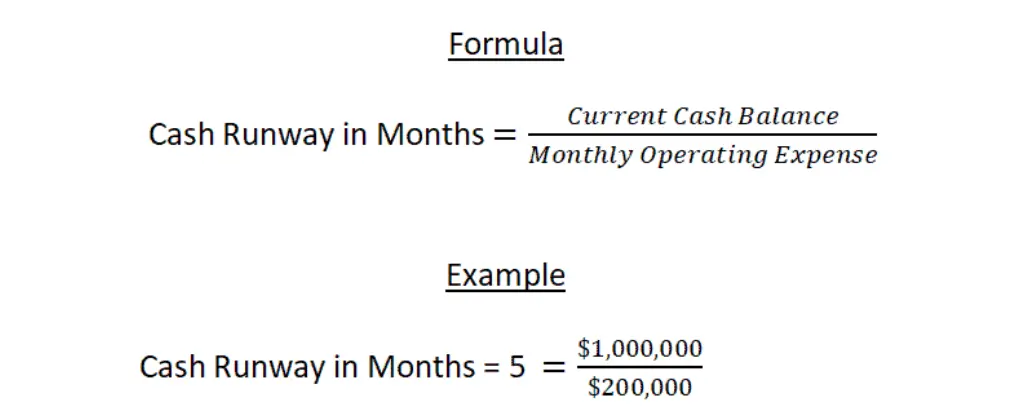
Runway should govern every decision you make. Most founders calculate it too late, or wrong.
The formula
Runway in months = cash available ÷ monthly net burn
Net burn is money out minus money in. Two things founders routinely leave out: the bank’s minimum balance, which is locked and not spendable, and their own living costs, which are real whether or not you pay yourself a formal salary.
The 18-month rule
Budget for 18 to 24 months, not 12. Here’s why 12 fails: three months to set up, six months to build, and then you’re raising again with three months left. That is a negotiating position of pure weakness, and investors can read it instantly.
Eighteen months gives you roughly twelve months of real building and six months to raise while you still have leverage. Early-stage UAE startups commonly operate lean for 12 to 18 months with a small core team before scaling headcount.
When to start raising
Start when 6 to 9 months of runway remain. A well-prepared UAE round takes four to six months from first outreach to money in the bank. Poorly prepared companies take six to twelve months, or never close.
Wait until three months are left and you’re not fundraising, you’re negotiating from desperation, and the terms will show it.
Extending runway without raising
- Take on modest consulting revenue in your domain. It extends runway and generates customer insight.
- Choose a cheaper free zone. The spread between zones can be tens of thousands of dirhams a year.
- Use a bank with no minimum balance and unlock AED 25,000 to AED 50,000 of trapped capital.
- Apply to accelerator or innovation programmes offering subsidised workspace and licensing.
- Delay the second visa and second salary until you have proof.
- Pursue non-dilutive government grants and soft loans, which cost equity nothing.
Where UAE Pre-Seed Money Actually Comes From
Personal savings
Still the most common starting point, costs no equity, and signals conviction to every investor who follows.
Friends and family
Typically AED 50,000 to AED 200,000. Fast and relationship-based. Document it cleanly, or you’ll damage both the cap table and the relationship.
Angel investors and networks
The workhorse of UAE pre-seed. Cheques typically run AED 100K to AED 2M, and angels are often former founders or senior operators who bring more than money. They invest on trust, which is why warm introductions matter far more than a cold deck. Someone has to drive the round to a close, or it drifts for months.
Accelerators and innovation programmes
These trade equity (or sometimes nothing) for structure, credibility, subsidised workspace, and introductions. Most valuable when your bottleneck is validation or network rather than cash. Least valuable when you already have traction and warm investor access.
Government grants and soft loans
The UAE offers meaningful non-dilutive support, including grants and interest-free loans, with some programmes reserved for UAE nationals. You keep 100% of your equity and gain third-party validation. The trade-off is process: detailed applications, business plans, and eligibility criteria. Pursue them, but never build your plan around a grant you haven’t won.
Early-stage VC and micro-VCs
A genuine institutional pre-seed layer now exists, so you no longer have to pretend to be seed-stage to get a meeting. Seed cheques run USD 500K to $2M. Best when you have an MVP, evidence of demand, and want a lead to anchor the round.
Family offices
The UAE has one of the world’s highest concentrations of family office capital. They’re flexible on stage and sector with long time horizons, but they’re relationship-driven rather than process-driven, decision timelines are longer, and access runs through warm introductions.
What Investors Expect Before They Write a Cheque
- Evidence the problem is real. Customer interviews, a waitlist, a pilot, letters of intent. Anything beyond your own conviction.
- A clean legal structure. Entity, licence, cap table, and shareholder agreements settled before you approach investors. Messy structure kills deals at diligence.
- A specific ask and use of proceeds. “AED X for these two hires, AED Y for product, AED Z for GCC expansion” beats “we’re raising to grow.” Vague use of proceeds is a documented deal-killer.
- A team that can execute. At pre-seed, investors underwrite you more than the product.
- A warm introduction. Cold outreach conversion to UAE VC is very low. Build relationships before you need them.
Frequently Asked Questions
How much pre-seed funding can a UAE startup raise?
Typically $50K to $500K. Angel cheques commonly run AED 100K to AED 2M, seed VC cheques USD 500K to $2M, and friends-and-family rounds AED 50,000 to AED 200,000. Founders usually give up 10% to 20% equity at pre-seed and seed.
How much money do I need to start a startup in the UAE?
Validating an idea can cost AED 25,000 to AED 40,000. One full-time founder for 12 months runs roughly AED 200,000 to AED 250,000. Two founders over 18 months need AED 430,000 to AED 500,000 in lean survival mode, and AED 630,000 to AED 1.08M on a realistic budget.
Should I bootstrap or raise pre-seed funding?
Bootstrap if you can reach revenue within six months, your build is capital-light, and you’re not in a race. Raise if you face a long pre-revenue build, need scale for the model to work, or must hire before you can earn. For most founders the strongest path is to bootstrap to validation, then raise on evidence.
How long should my runway be before I raise?
Budget 18 to 24 months, not 12. Start raising with six to nine months left, because a well-prepared UAE round takes four to six months to close, and an unprepared one can take six to twelve.
Can I raise pre-seed funding in the UAE without traction?
Rarely from institutional investors. There’s a validation threshold here, and most funds want evidence the problem is real. Idea-stage capital more often comes from savings, friends and family, accelerators, or government grants.
Do I need a UAE entity before raising?
Not strictly, but in practice most UAE-based investors expect a clean local structure, and some founders instead raise through offshore or financial free zone entities such as DIFC or ADGM, where instruments like SAFEs are recognised. Whichever route you take, your structure should be settled before you approach investors.
Sources
- UAE Ministry of Economy and Tourism — Establishing business in free zones
- The Official Platform of the UAE Government — Starting a business in a free zone
- Corvian Advisory — How to Raise Capital in the UAE: Fundraising Guide 2026 (investor types, deal sizes, process timelines, valuation methods, term sheet standards; MENA investment volume per MAGNiTT)
Figures are indicative planning ranges as of mid-2026, not guarantees. Round sizes, valuations, licence fees, visa costs, and bank requirements vary by sector, free zone, entity type, and company profile, and change over time. Confirm current fees with the relevant free zone authority and current tax obligations with the Federal Tax Authority. This guide is general information, not financial, tax, or legal advice.
Share this article!


Recent News
How to Compare Trading Platforms When You Are Based in the Gulf: Costs, Regulation and Access to UK and US Markets

How to check your credit score in the UAE
How Many Free Zones in Dubai? and Why It Barely Matters
Featured





No reviews found.
No reviews found.
No reviews found.