What Is Commodity Trading? A Clear Guide for 2026
 By
Sam Reid
By
Sam Reid
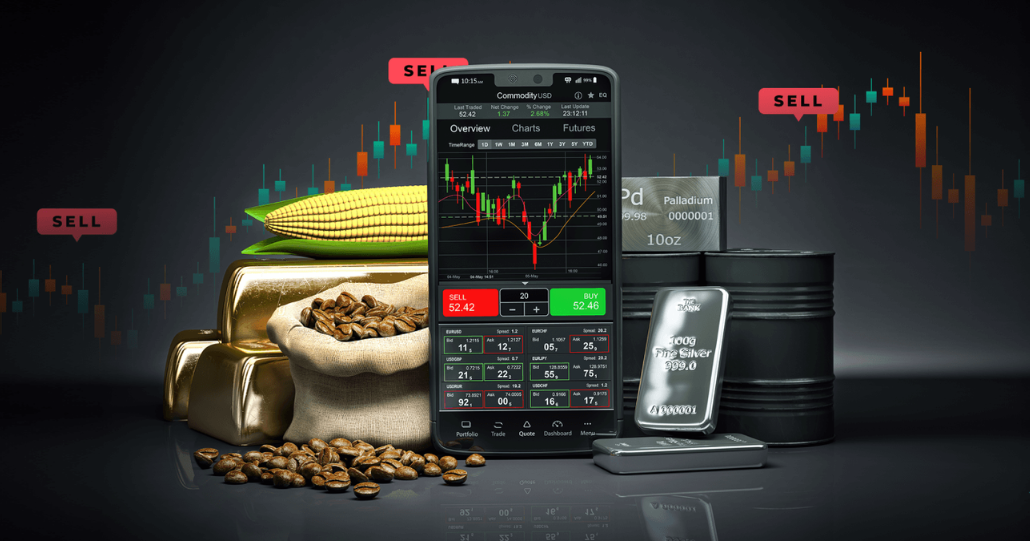
Commodity trading is the buying and selling of raw materials such as oil, gold, wheat, and natural gas, either as physical goods or, far more commonly, as financial contracts that track their prices. It is one of the oldest forms of trade in the world and one of the largest markets in it. The global commodity trading market was valued at roughly 24.7 trillion dollars in 2025, according to Intel Market Research.
For a beginner, the confusing part is that trading a commodity usually has nothing to do with owning the physical thing. You are far more likely to trade a contract based on the price of oil than to take delivery of a barrel. This guide explains what commodities are, how the market works, the ways you can access it, and the risks worth understanding before you start.
What Counts as a Commodity
A commodity is a basic raw material or primary product with economic value, and one unit is essentially interchangeable with another of the same grade. A barrel of a given grade of crude oil is the same whoever produced it, which is what makes commodities tradable as standardised contracts. They fall into two broad groups.
Hard commodities
Hard commodities are natural resources that are mined or extracted from the earth. This group covers energy products like crude oil and natural gas, and metals like gold, silver, and copper. Gold is worth singling out, because it behaves as a commodity, a store of value, and a safe-haven asset all at once, which gives it price behaviour unlike most other raw materials.
Soft commodities
Soft commodities are agricultural products and livestock, the things that are grown or farmed rather than mined. Wheat, coffee, cocoa, cotton, sugar, and cattle all sit here. Soft commodities are especially sensitive to weather, disease, and seasonal cycles, which makes their prices prone to sharp, sudden moves.
How the Commodity Market Works
Commodities trade in two connected markets.
The spot market is for immediate delivery. Prices here reflect current supply and demand, and physical goods change hands. The futures market is where most financial trading happens. A futures contract is a standardised agreement to buy or sell a set quantity of a commodity at a fixed price on a future date, as the CFA Institute defines it. The futures market dominates activity, making up the large majority of commodity trading volume.
Most futures contracts never end in physical delivery. Traders close their positions before the contract expires, taking a profit or loss on the price change without ever handling the commodity. A trader speculating on oil has no intention of receiving a tanker, and the contract structure lets them avoid it.
Who trades commodities, and why
The market brings together participants with very different goals, which is part of what keeps it liquid.
- Hedgers are producers and consumers of the physical commodity who use futures to lock in prices and protect their margins. A wheat farmer can sell wheat futures at planting to guarantee a price at harvest, and an airline can buy fuel futures to cap its costs.
- Speculators have no interest in the physical goods. They trade purely to profit from price movement, and by doing so they supply the liquidity that hedgers rely on.
- Arbitrageurs profit from small price differences between related markets, which helps keep prices consistent.
Where it all trades
Commodity contracts trade on regulated exchanges that standardise the contracts and provide price transparency. The major ones include the Chicago Mercantile Exchange (CME), the New York Mercantile Exchange (NYMEX) for energy and metals, the London Metal Exchange (LME) for industrial metals, and the Intercontinental Exchange (ICE) for energy and soft commodities. These exchanges are where global reference prices, like the benchmark for crude oil, are set.
Contango and Backwardation: The Idea That Explains Roll Costs
One concept separates people who understand commodity products from those who get caught out by them. The spot price and the futures price of the same commodity are usually different, and the gap between them is called the basis.
When the futures price is higher than the spot price, the market is in contango. When it is lower, the market is in backwardation. This matters because products that hold futures contracts, including many commodity ETFs, have to periodically sell an expiring contract and buy a later-dated one. In a contango market, that later contract costs more, and repeating the process drags on returns over time. It is why a commodity ETF can underperform the headline spot price even when the commodity itself rises. If you plan to hold a futures-based product, this is the mechanic to understand first.
Ways to Trade Commodities
You rarely buy the physical commodity. Instead, you choose an instrument that gives you exposure to its price, and each one suits a different type of trader.
| Method | How it works | Best suited to |
|---|---|---|
| Futures contracts | Standardised exchange-traded agreements to trade at a future date, usually leveraged | Experienced traders and institutions comfortable with margin |
| CFDs | Contracts that track price movement without owning the asset, traded on leverage | Retail traders wanting flexible, short-term exposure |
| Commodity ETFs | Funds holding futures or physical commodities, bought like a share | Longer-term investors wanting simpler, diversified exposure |
| Commodity-linked stocks | Shares in producers such as mining or energy companies | Investors who want indirect exposure through equities |
A quick word on the leveraged options. Futures and CFDs both use leverage, which magnifies gains and losses alike, and CFDs add overnight financing costs if you hold positions beyond a day. ETFs and stocks are simpler and carry no margin risk, though a futures-based ETF still faces the roll costs described above. Match the instrument to your experience and how long you intend to hold, not to the size of the potential gain.
Why People Trade Commodities
Commodities earn their place in a portfolio for a few concrete reasons. They tend to move differently from stocks and bonds, which can add diversification. They have historically been used as a hedge against inflation, since raw-material prices often rise when the cost of living does. And highly liquid markets like crude oil and gold offer plenty of price movement for active traders to work with.
The Risks You Need to Weigh
Commodity trading carries real risk, and the features that make it attractive are the same ones that make it dangerous.
Prices are volatile. Commodities react sharply to weather, geopolitics, supply disruptions, and economic data, and a single event can move a market hard and fast. Leverage compounds this. Trading futures or CFDs on margin means a small price move can produce a large gain or a large loss relative to the money you put down, and losses can exceed your initial stake on some products. Add the roll costs on futures-based products, wider spreads than you would see on major shares, and overnight financing on leveraged positions, and the running costs matter as much as the direction of the trade.
Understand the instrument before you use it, size positions so a bad move cannot wipe you out, use stop-losses, and practise on a demo account before committing real money. Commodities are only as risky as the way you trade them.
Frequently Asked Questions
What is commodity trading in simple terms?
It is buying and selling raw materials like oil, gold, and wheat, usually through financial contracts that track their prices rather than by handling the physical goods. Traders aim to profit from price movements, while producers and consumers use the same market to lock in prices and manage risk.
What are the two main types of commodities?
Hard commodities, which are mined or extracted, such as oil, gold, and copper, and soft commodities, which are grown or farmed, such as wheat, coffee, and cotton. Soft commodities tend to be more sensitive to weather and seasonal factors.
Do I have to take delivery of the commodity?
Almost never as a retail trader. Most futures positions are closed before expiry, and instruments like CFDs, ETFs, and commodity stocks never involve physical delivery at all. You are trading the price, not the product.
How do beginners start trading commodities?
Most beginners start with ETFs or CFDs rather than futures, because they are simpler and require less capital. The usual path is to learn how the market works, choose a regulated broker, practise on a demo account, and start with small positions and strict risk management.
Is commodity trading risky?
Yes. Prices are volatile, and leveraged products like futures and CFDs can amplify losses well beyond your initial deposit. The risk is manageable with proper position sizing, stop-losses, and a clear understanding of the instrument, but it should never be underestimated.
Why do commodity ETFs sometimes underperform the commodity?
Many hold futures contracts that must be rolled forward as they expire. In a contango market, where later-dated contracts cost more, this rolling drags on returns over time, so the ETF can lag the spot price even when the commodity rises.
Final Thoughts
Commodity trading gives you access to the raw materials that underpin the global economy, from the oil that fuels transport to the wheat that feeds it. For most traders it happens through contracts and funds rather than physical goods, which makes the market reachable but also easy to misunderstand. Learn the difference between spot and futures, understand how leverage and roll costs affect your returns, and treat risk management as the core of the job rather than an afterthought. Done with that discipline, commodities are a powerful addition to how you trade and invest.
Sources
- CFA Institute – Introduction to Commodities and Commodity Derivatives (spot vs futures markets, contango and backwardation, market participants)
- Statista – Commodities Market Forecast, Worldwide (market structure and size)
- Intel Market Research – Commodity Trading Market (global market valuation)
Share this article!


Recent News
How to Compare Trading Platforms When You Are Based in the Gulf: Costs, Regulation and Access to UK and US Markets
How to check your credit score in the UAE
How Many Free Zones in Dubai? and Why It Barely Matters
Featured
No reviews found.




No reviews found.
No reviews found.
No reviews found.