What Is an Order Block and How to Read Market Structure
 By
Staff Writer
By
Staff Writer

Summary
Order blocks give traders a structured way to understand where major market participants placed significant buy or sell orders. These zones often act as turning points in the chart and help traders read shifts in market structure with more clarity. In this guide we explore what is an order block, how it forms, how to identify valid and invalid examples, how to trade them with confidence, and how they fit into broader market structure concepts. A full real world style case study is also included to show how these principles work in practice.
What Is an Order Block?
Many traders first encounter order blocks when learning about institutional trading or smart money concepts. At their core, order blocks represent areas on the chart where large clusters of limit buy or sell orders previously created a powerful reaction. They are often seen as footprints of banks, funds, and other large institutions that cannot enter or exit the market with small orders. Understanding what is an order block in trading helps newcomers see how markets behave around key zones instead of relying on random entries. For those focused specifically on currency markets, studying what is an order block forex helps bring clarity to support and resistance formation.
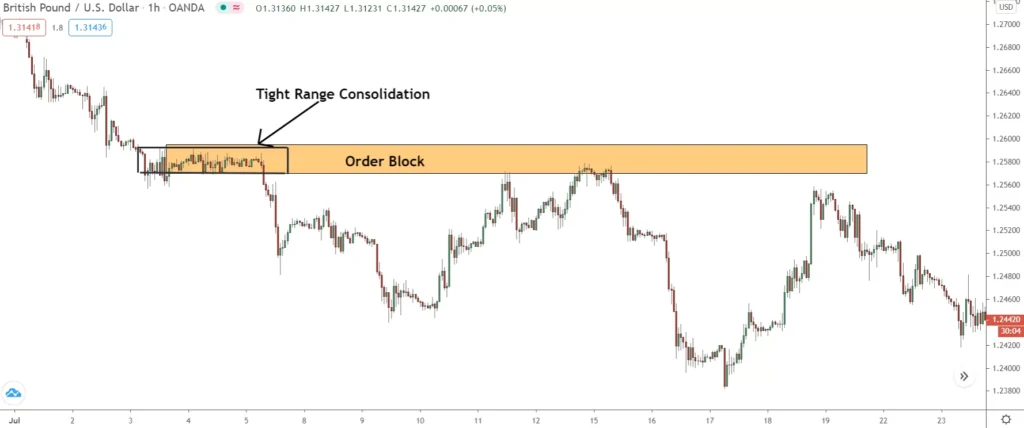
These zones tend to show where a strong shift in control occurred. When price later returns to an order block, the market often reacts because leftover orders may still be resting there. This creates a logical basis for timing entries, exits, and risk levels while reading market structure with more confidence.
Why Order Blocks Matter in Market Structure
Order blocks give insight into accumulation and distribution. When price consolidates before a strong move, institutions may be building positions. Once price breaks out, this displacement reveals which side has taken control. A return to the order block often tests whether that control remains intact. This process helps traders understand break of structure signals and change of character moments that indicate shifts in trend. With practice, observing these relationships provides a clearer map of how price flows through liquidity and reacts to high interest zones.
How to Identify an Order Block
Key Characteristics of Order Blocks
Beginners can use several simple traits to recognise potential order blocks. First, look for a small consolidation period before a strong impulsive move. This shows balance followed by imbalance. Second, a liquidity grab may occur as price sweeps above or below a previous high or low before reversing. Third, the explosive move away from the zone usually leaves behind an imbalance or fair value gap, which reinforces the idea that large orders pushed the market quickly. Finally, volume often increases during these moments, suggesting stronger participation.
Tools and Indicators That Help Identify Order Blocks
Many platforms offer tools that highlight potential zones. TradingView has smart money concepts scripts that identify break of structure signals, liquidity sweeps, order blocks, and fair value gaps. MT4 and MT5 also have indicators designed to detect supply and demand footprints. Volume profile tools show where heavy activity occurred and can provide greater conviction. Still, the most reliable method is visual price action analysis. Indicators help support the view but should not replace understanding of the pattern itself.
Bullish and Bearish Order Blocks Explained
How to Find a Bullish Order Block
A bullish order block appears before a strong upward move. Traders look for the last bearish candle inside a small consolidation range that preceded a major rally. The high and low of that candle form the boundaries of the bullish order block. When price returns to this area, the expectation is that demand may still be present, making it a potential zone for long setups.
How to Find a Bearish Order Block
A bearish order block develops before a strong downward move. This involves finding the last bullish candle before price drops sharply. That candle defines the supply zone that may later serve as a short entry area. Traders often watch for price to retrace into the block, show hesitation or rejection, and then resume the bearish move.
How to Identify Valid vs Invalid Order Blocks
Liquidity Sweeps and Takeouts
A liquidity sweep occurs when price quickly moves above a high or below a low to grab liquidity before reversing. Many valid order blocks form right after such a sweep. This makes sense because institutions often use liquidity pools to fill large orders. If a block forms without any sweep, it may still work, but the probability is weaker.
Inefficiency and Imbalance
Strong moves leave inefficiencies in the form of imbalanced candles with little overlap. These fair value gaps show where price moved too quickly for full participation. Valid order blocks often sit near these gaps, giving traders two layers of confluence.
Unmitigated vs Mitigated Blocks
An unmitigated block is one that price has not yet returned to. These tend to carry more weight because institutional orders may still remain unfilled. Once a block is mitigated, its strength often decreases. Beginners should focus on clean, untouched blocks rather than zones that have been tested many times.
Valid Order Block Criteria Checklist
- Consolidation followed by strong displacement
- Liquidity sweep of a recent high or low
- Obvious imbalance or fair value gap left behind
- Above average volume
- Unmitigated zone
- Fits within broader market structure
Types of Order Blocks With Examples
Bullish Order Block
Shows aggressive buying interest, forms before a strong rally, and often supports price on retests.
Bearish Order Block
Shows aggressive selling interest, forms before a sharp decline, and often acts as resistance on retests.
Breaker Block
Appears when price breaks through a previous order block and flips its role from resistance to support or vice versa.
Rejection Block
Forms when price attempts to break through a block but is strongly rejected, signalling potential reversal pressure.
Vacuum Block
Occurs when price moves through a low liquidity area very quickly. These gaps can create fast future reactions.
Order Block Trading Strategy
Define Market Context
Before looking for entries, identify the trend. Use higher timeframes to establish bullish, bearish, or ranging conditions. This step prevents many poor trades because order blocks work best when aligned with structure.
Spot the Order Block
Mark the last opposing candle before a displacement move. Ensure the zone makes sense in relation to liquidity and structure. Beginners benefit from starting with clear textbook examples before tackling messy charts.
Validate the Block
Use the criteria discussed earlier. Look for a sweep, imbalance, and clean rejection history. If most criteria are present, the probability increases.
Entry Conditions
Traders often wait for price to return to the block and show confirmation such as wick rejection or a small break of structure on a lower timeframe. This helps filter out weaker setups. Indicators like moving averages or RSI can also provide supporting evidence.
Manage the Trade
Stops are usually placed just outside the block. Targets are often set at the next major liquidity area. Traders can scale out partial profits or move the stop as structure develops.
Add Confluence
Many traders combine order blocks with fair value gaps, trendlines, or volume spikes. These confluences are optional but helpful for beginners seeking more confidence.
Order Blocks vs Supply and Demand vs Fair Value Gaps
Order blocks represent institutional footprints. Supply and demand zones are broader areas of imbalance between buyers and sellers. Fair value gaps mark inefficiencies where price moved too quickly. They are related concepts but each serves a different role. Order blocks give precise entry zones, supply and demand show bigger picture context, and fair value gaps help refine entries during pullbacks.
How to Spot Fake or Weak Order Blocks
Weak blocks often lack a liquidity sweep, have no imbalance, show flat volume, or have already been mitigated. They also tend to form against the higher timeframe trend. Watching how price reacts on retest gives further clues. Little reaction usually signals low institutional interest.
Best Order Block Indicators and Tools
TradingView Order Block Scripts
Smart money concept tools highlight BOS signals, liquidity sweeps, and blocks.
MT4 and MT5 Order Block Indicators
Useful for forex traders who prefer automatic zone detection.
Volume Profile Tools
These show where significant activity occurred and help validate institutional zones.
Market Structure Indicators
Tools that detect swing highs, swing lows, BOS, and CHoCH help beginners read structure with more clarity.
Which Timeframes Order Blocks Work Best On
Higher timeframes like H4 and daily tend to be more reliable. Lower timeframes still work but require more skill because noise is greater. Beginners should start with larger timeframes before scalping.
What Markets Order Blocks Work In
Order blocks apply to forex, crypto, stocks, indices, and futures. Currency traders especially benefit from learning what is an order block forex because liquidity is high and institutional behavior is more visible.
Risk Management When Trading Order Blocks
Use consistent position sizing, limit risk to small percentages per trade, and always place stops. Avoid overtrading by focusing on clean setups. Backtesting helps build confidence before going live with a broker such as AvaTrade.
Common Mistakes
Many traders rely only on order blocks without understanding the market context. Others misidentify zones or enter without confirmation. Emotional trading and ignoring news events can also lead to poor outcomes. Staying disciplined and patient is essential.
Case Study: Bearish EUR USD Order Block on the Daily Chart
In this example a trader uses a bearish order block on EUR USD to catch a swing sell after a clear market structure shift. On the daily chart price moved from bullish to bearish structure by breaking a significant low. This shift suggested that sellers were now in control and the trader chose to only look for short setups.
At the swing high price formed a bullish candle followed by a strong bearish engulfing candle that completely covered the previous candle’s range. This engulfing move signaled aggressive selling and created a textbook bearish order block. The trader marked the high and low of the bullish candle as the zone of interest.
After the initial drop price retraced back into the bearish order block. On a lower timeframe the trader waited for a small bearish structure shift before entering. The stop was set 10 to 20 pips above the block’s high and the target was placed at the next significant liquidity pool below. As price resumed downward the trade delivered roughly a 1 to 4 risk reward outcome with one unit of risk generating four units of profit.
Bottom Line
Order blocks help traders understand where major participants acted in the market. By learning how to identify valid zones, read structure, and wait for confirmation, beginners can improve timing and reduce impulsive entries. No method is perfect but a thoughtful approach that includes risk management, structure analysis, and balanced expectations provides a strong foundation for long term development.
FAQs
What is the meaning of order block?
An order block is a price zone where significant institutional buying or selling occurred, creating a potential support or resistance area.
How do you know a valid order block?
Valid blocks show consolidation, a liquidity sweep, strong displacement, imbalance, increased volume, and remain unmitigated until price returns.
Is order block the same as fair value gap?
No. An order block is a footprint of institutional orders while a fair value gap is an inefficiency created by a fast move. They often appear together but serve different purposes.
Share this article!


Recent News
How to Compare Trading Platforms When You Are Based in the Gulf: Costs, Regulation and Access to UK and US Markets

How to check your credit score in the UAE

How Many Free Zones in Dubai? and Why It Barely Matters

Featured
No reviews found.
No reviews found.



No reviews found.
No reviews found.