Understanding Stock Market Trends and Patterns
 Sam Reid
Staff Writer
Sam Reid
Staff Writer  13th Jan 2026
The stock market is a dynamic and ever-changing landscape. Understanding its trends and patterns is crucial for traders. These trends can guide your trading strategies and help you make informed decisions. Whether you’re a beginner or an experienced trader, grasping these concepts is essential. This article will explore the intricacies of stock market trends and patterns. We’ll also delve into trading strategies, the best day trading stocks, and provide a trading platforms review.
Summary
This article explains how to recognize stock market trends (up, down, sideways) and chart patterns, and how they inform trade timing and decisions. It covers core analysis tools, technical indicators and patterns alongside fundamental metrics and matches popular strategies (trend following, contrarian, breakout, day, swing, scalping, momentum) to market conditions. You’ll also learn risk management and emotional discipline essentials, how to evaluate trading platforms, and why news, economic indicators, and sentiment matter. The aim is to help you build, test, and refine a robust trading plan for consistent, informed execution.
What Are Stock Market Trends and Patterns?
Stock market trends are the general directions in which stock prices move over time. They can be upward, downward, or sideways, revealing the market’s mood.
Patterns, on the other hand, are specific formations created by price movements on charts. They help predict future price movements.
Trends and patterns form the foundation of market analysis. Traders use them to determine the right time to buy or sell stocks.
Key components of trends and patterns include:
- Uptrends: Prices consistently rise, creating higher highs.
- Downtrends: Prices fall, resulting in lower lows.
- Sideways trends: Prices move within a narrow range.
Recognizing these patterns is crucial for developing effective trading strategies. They provide insights into market behavior and potential price changes.

The Importance of Understanding Market Trends in Trading Stocks
Grasping market trends is vital for successful stock trading. It allows traders to anticipate price movements and seize opportunities efficiently.
When traders understand market trends, they can align their strategies accordingly. This helps in managing risks and maximizing gains.
Key benefits of understanding market trends include:
- Enhanced decision-making
- Improved timing for trades
- Better risk management
Ultimately, recognizing and interpreting trends leads to informed trading. This reduces uncertainty and boosts confidence in trading decisions. A keen eye on trends often separates successful traders from the rest.
Types of Market Trends: Uptrends, Downtrends, and Sideways Trends
Market trends can broadly be classified into three types: uptrends, downtrends, and sideways trends. Each indicates a different market condition.
An uptrend is marked by rising stock prices over time. This trend suggests investor optimism and a thriving market environment.
Conversely, a downtrend involves declining stock prices. It hints at investor pessimism and negative market conditions.
A sideways trend indicates stable prices within a narrow range. This reflects a market with no clear directional momentum.

(by Nimisha Mekala)
Recognizing these trends is key for traders to adjust their trading strategies effectively. Understanding each trend type helps traders make better decisions. Identifying the current trend type enables more strategic planning in response to market conditions.
Key Tools for Analyzing Stock Market Trends
To analyze stock market trends, traders use a variety of tools. These tools help identify potential opportunities and risks.
Technical analysis is the most common approach. It utilizes charts and statistical indicators to forecast market movements.

(by Sharad Bhat)
Fundamental analysis, on the other hand, examines a company’s financials. This analysis assesses value and future potential.
Common tools used in analysis include:
- Moving Averages
- Bollinger Bands
- Relative Strength Index (RSI)
Each tool offers unique insights into market behavior. Moving averages, for instance, smooth out price data to identify trends.
Additionally, traders often use trading platforms to access these tools. A thorough trading platforms review can help select the best one.

Combining different analysis tools provides a comprehensive market understanding. It’s crucial for traders to familiarize themselves with these essential tools.
Technical Analysis: Indicators and Chart Patterns
Technical analysis focuses on historical price data. Traders use indicators and chart patterns to predict future movements.
Common indicators include the MACD and RSI. These help gauge momentum and trend direction.
Chart patterns like head-and-shoulders or flags signal potential reversals. Recognizing these patterns aids in making timely decisions.
Key technical analysis tools are:
- Candlestick patterns
- Trendlines
- Fibonacci retracement
These indicators and patterns form the backbone of technical analysis. They offer traders essential data-driven insights.
Utilizing technical analysis can enhance trading strategies and outcomes. Understanding these indicators is vital for effective stock trading.
Fundamental Analysis: Evaluating Company Health
Fundamental analysis delves into a company’s financial health. This includes studying earnings, assets, and market position.
Key metrics analyzed are revenue, profit margins, and debt levels. These indicate how well a company performs financially.
Important aspects to evaluate include:
- Financial statements
- Industry competitiveness
- Management effectiveness
Fundamental analysis provides a long-term perspective. It helps assess whether a stock is undervalued or overvalued.
Proper evaluation leads to informed investment decisions. Understanding these fundamentals aids in selecting stocks with solid potential.
Popular Trading Strategies for Different Market Conditions
Trading strategies vary depending on market conditions. Each strategy aims to capitalize on specific trends and patterns.
Selecting the right strategy depends on the trader’s goals and risk tolerance. It’s essential to understand different strategies to succeed.

Some common trading strategies include:
- Trend following: Capitalizing on market trends over time.
- Contrarian trading: Betting against prevailing market sentiment.
- Breakout trading: Entering positions during price breakouts.
Trend following works well in stable conditions. Traders ride the wave of existing trends to maximize gains.
Contrarian trading involves taking positions against crowd behavior. This strategy can be effective during overbought or oversold conditions.
Breakout trading focuses on volatility and sudden price movements. Traders capitalize on sharp changes in stock prices for quick profits.
Day Trading: How to Spot the Best Day Trading Stocks
Day trading is all about quick trades. Traders buy and sell the same stock within a single day.
The best day trading stocks show high liquidity and volatility. These stocks present many opportunities for profit in short time frames.

Consider these factors when selecting day trading stocks:
- Liquidity: Ensures smooth transactions without major price changes.
- Volatility: Potential for significant price movements.
- News events: Stocks impacted by news offer profitable chances.
Liquidity ensures easy entry and exit points. Volatile stocks create opportunities for quick gains.
Keeping an eye on news events helps spot stocks poised for price shifts. These events can trigger daily fluctuations.
Swing Trading, Scalping, and Momentum Trading
Swing trading captures gains over days or weeks. It utilizes interim price movements within a broader trend.
Scalping involves rapid trades for small profits. Scalpers execute dozens of trades in minutes or hours.

Key features of these strategies include:
- Swing trading: Exploit short-term price trends.
- Scalping: Benefit from minute price changes.
- Momentum trading: Ride the wave of current market movements.
Swing traders aim to capture the “swing” in stock prices. This strategy benefits from minor upswings or downswings.
Scalpers thrive on market inefficiencies. Small profits accumulate through frequent trades.
Momentum traders focus on stocks showing strong trends. They buy securities with upward momentum and sell those going down.
Understanding and applying the right strategy is key. It ensures adaptability to changing market conditions and optimizes trading success.
Risk Management and Emotional Discipline in Trading
Managing risk is crucial in trading stocks. It involves setting stop-loss orders and position sizes to control potential losses.
Emotional discipline complements risk management. Staying calm during market swings helps traders make rational decisions. Emotional trading often leads to poor outcomes.
Key risk management tactics include:
- Stop-loss orders: Limit potential losses on trades.
- Diversification: Spread investments to reduce risk.
- Trading journal: Track performance and learn from mistakes.
Combining these strategies helps mitigate risks. With a clear plan, traders can better handle the emotional challenges of the stock market. Maintaining discipline ensures long-term success.
Choosing the Right Trading Platform: Review and Comparison
Selecting the right trading platform is essential for trading stocks efficiently. Each platform offers unique features that cater to different trading styles.
When comparing trading platforms, consider factors such as user interface, fees, and available tools. Platforms with a user-friendly design enhance the trading experience, especially for beginners.
Here are key aspects to review:
- User Interface: Simple navigation and clear layouts.
- Fees: Competitive transaction and service fees.
- Tools: Access to research, charts, and indicators.
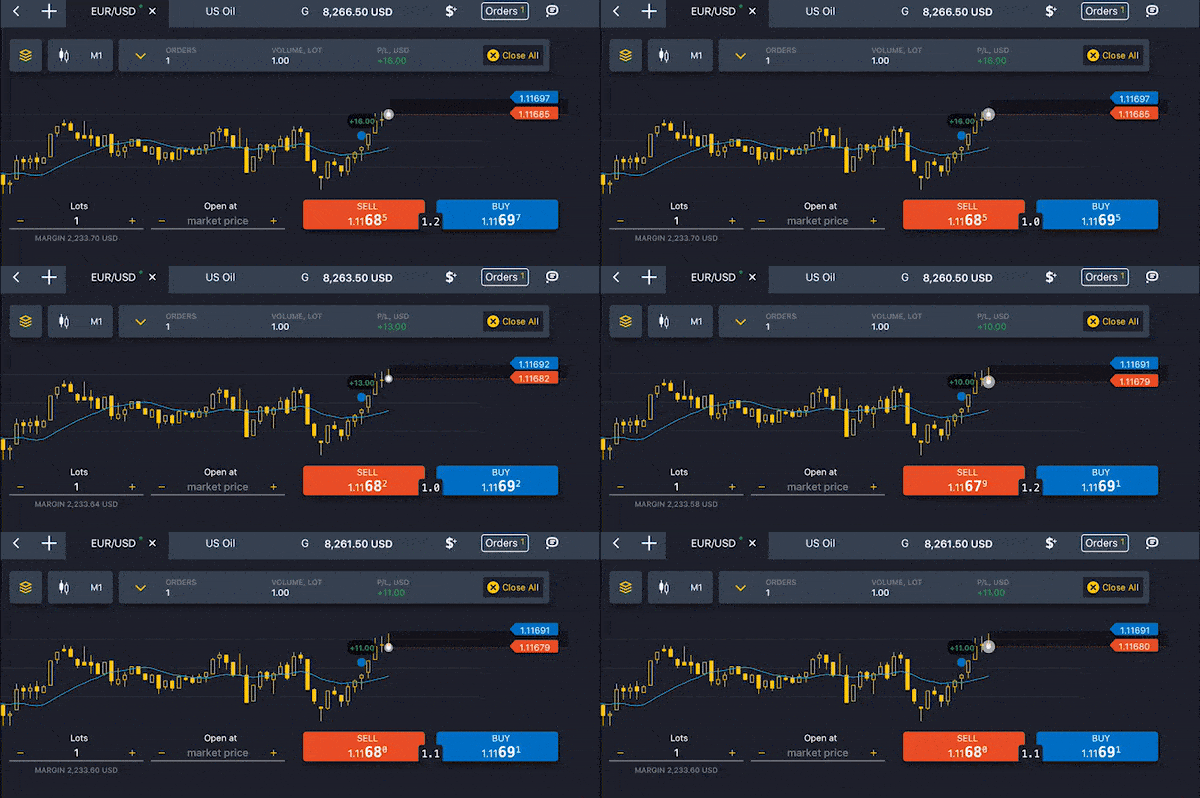
Testing platforms with demo accounts can help evaluate performance. Thorough research ensures the platform suits your trading needs and goals.
Staying Informed: News, Economic Indicators, and Market Sentiment
Staying updated on market news and economic indicators is vital for successful trading. These elements can dramatically sway stock prices.
Understanding market sentiment helps predict stock movements. Traders can gain insights from various sources:
- Market News: Real-time updates on global events.
- Economic Indicators: Reports on GDP, unemployment, and inflation.
- Market Sentiment: Analysis of investor emotions and outlook.
Monitoring these factors helps traders make informed decisions and adjust strategies accordingly.
Building and Testing Your Trading Plan
Creating a solid trading plan is crucial for achieving consistency in trading stocks. A well-crafted plan addresses multiple aspects of trading.
Key elements to include in your trading plan are:
- Financial Goals: Short-term and long-term objectives.
- Risk Tolerance: Level of acceptable risk.
- Entry and Exit Strategies: Criteria for initiating and closing trades.
Regularly testing and reviewing your plan with simulated trades can help refine your strategies. Adaptation to changing market conditions ensures lasting success.
Conclusion: Mastering Stock Market Trends for Trading Success
Mastering stock market trends enhances trading success by improving decision-making. Consistent learning and adaptation are crucial in the dynamic world of stock trading. By leveraging effective trading strategies and understanding market patterns, traders increase their chances of profitability. A comprehensive trading plan also solidifies this foundation.
Ultimately, success in trading requires continuous education and practice. Staying informed about market conditions and refining your strategies can lead to long-term gains and a rewarding trading experience.
Disclaimer: This content is for educational purposes only and not to be construed as investment advice. Remember that forex and CFD trading involves high risk. Always do your own research and never invest what you cannot afford to lose.