Signs You Are Overtrading
 Sam Reid · Senior Financial Markets Analyst
Staff Writer
Sam Reid · Senior Financial Markets Analyst
Staff Writer  28th Jan 2026
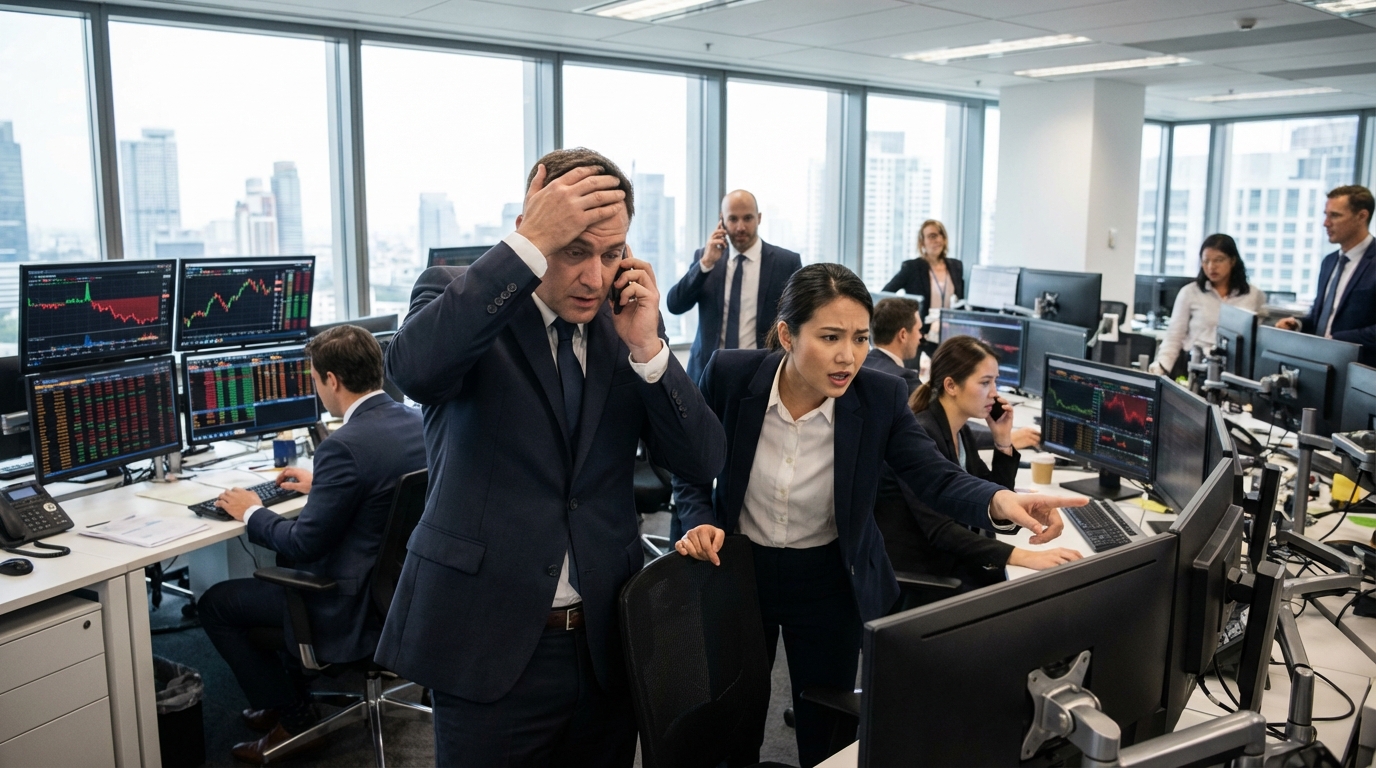
When we hear overtrading, we think back to a trader we observed once, who executed 47 trades in a single day. His account was down 12% by market close, and the worst part? Only three of those trades actually matched his strategy criteria. The rest were noise, impulse, and desperation dressed up as “opportunity.”
This scenario plays out constantly across trading floors and home offices worldwide. The difference between active trading and overtrading isn’t always obvious until you’re staring at a depleted account wondering what happened. Overtrading creeps in quietly, disguised as diligence or market awareness, but it leaves unmistakable damage in its wake.
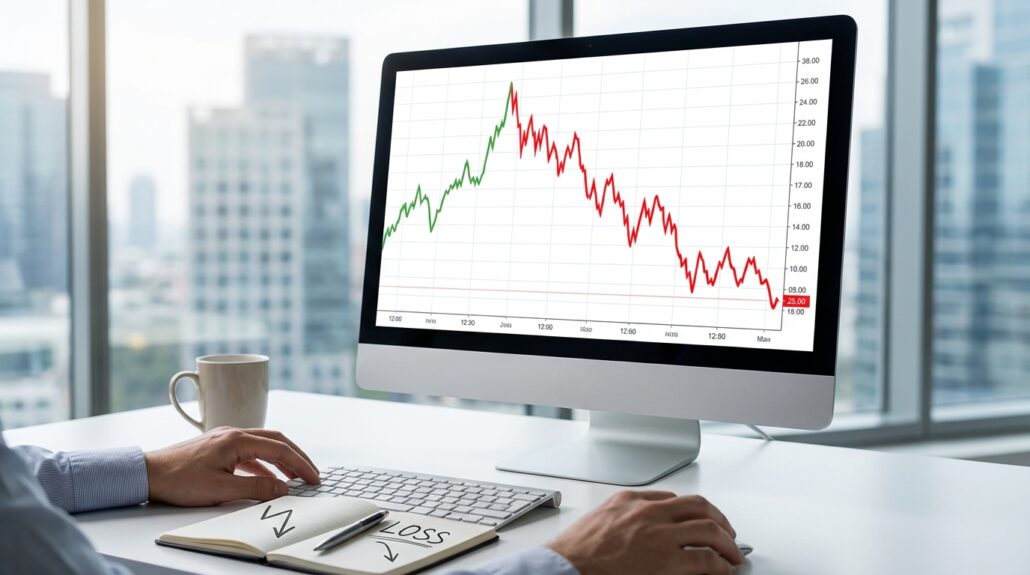
The financial toll is measurable: excessive commissions, unfavorable spreads, and the compounding effect of small losses that snowball into significant drawdowns. But the psychological cost runs deeper. Overtrading rewires your decision-making, erodes confidence, and transforms what should be a calculated endeavor into something closer to gambling.
Recognizing the signs early matters more than most traders realize. By the time your account balance screams the warning, you’ve already lost money you didn’t need to lose. The traders who build lasting success learn to identify these patterns before they spiral, implementing guardrails that protect both their capital and their mental clarity.
What follows isn’t theoretical advice pulled from textbooks. These are the specific warning signs that separate sustainable trading from self-destructive behavior, along with practical strategies for course correction.
Defining Overtrading and Its Impact on Capital
Overtrading occurs when a trader executes more positions than their strategy, capital, or market conditions justify. The definition sounds simple, but the line between productive activity and excessive trading blurs easily in practice.
The impact on capital compounds faster than most traders expect. Each unnecessary trade carries transaction costs, but the real damage comes from the cumulative effect of marginal decisions. A trader making 30 trades per day instead of their optimal 5-8 isn’t just paying 4x the commissions. They’re also entering positions with weaker setups, accepting worse risk parameters, and making decisions under increasing fatigue.
The Difference Between High Frequency and Excessive Trading
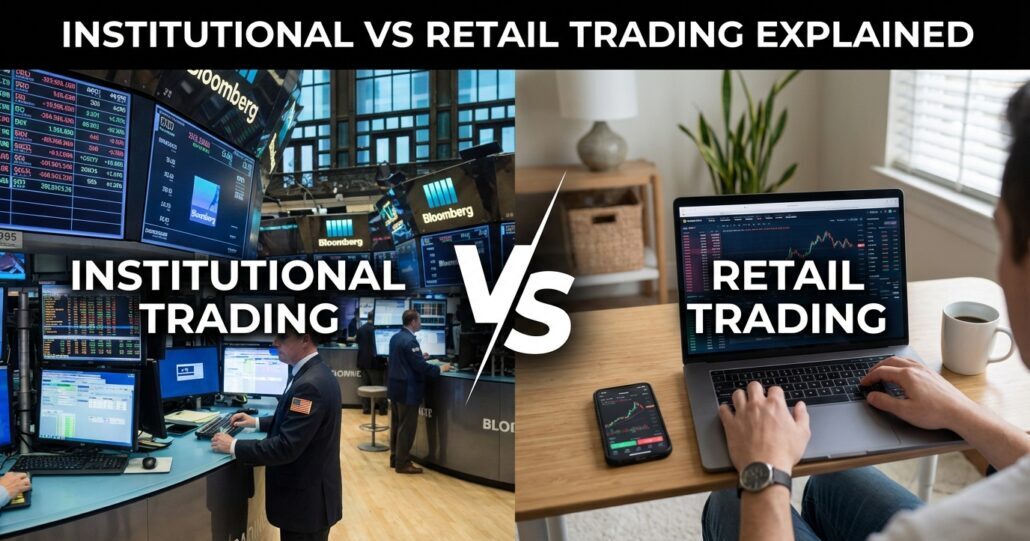
Professional high-frequency traders execute thousands of daily trades profitably because their systems are designed for that volume. Their edge exists in speed and scale, with razor-thin margins multiplied across massive position counts.
Retail traders attempting similar volume without comparable infrastructure are playing a different game entirely. When a discretionary trader increases their frequency beyond what their strategy supports, they’re not scaling success. They’re diluting their edge with noise.
The distinction comes down to whether each trade meets your established criteria. A scalper taking 50 quality setups differs fundamentally from someone forcing 50 trades because they feel compelled to be in the market. Volume alone tells you nothing. The quality-to-quantity ratio tells you everything.
How Excessive Commissions and Spreads Erode Profits
Consider a trader paying $5 per round-trip trade with an average profit target of $200. At 5 trades daily, commissions consume 2.5% of gross profits. At 25 trades daily, that jumps to 12.5% before accounting for the lower-quality setups that typically accompany higher frequency.
Spreads compound this effect, particularly in less liquid instruments. A forex trader paying a 1.5 pip spread on EUR/USD might not notice the cost on a 50-pip winner. But when they’re scalping for 8-10 pips across dozens of trades, spreads can consume 15-20% of their theoretical edge.
The math becomes brutal quickly. A strategy with a 55% win rate and 1:1 risk-reward has a positive expectancy. Add excessive transaction costs, and that same strategy becomes a slow bleed. Overtrading not only reduces profits, but It can transform winning systems into losing ones.
Psychological Indicators of Overtrading
The clearest signs of overtrading often appear in your mental state before they show up in your account balance. Your psychology broadcasts warnings that your P&L won’t reveal until later.
Watch for racing thoughts between trades, difficulty stepping away from screens, and the nagging sense that you’re missing something if you’re not positioned. These feelings precede the behavior that damages accounts.
The Impulse to Revenge Trade After a Loss
A losing trade creates psychological pressure that demands resolution. The rational response is to step back, reassess, and wait for the next quality setup. The overtrading response is to immediately seek another position to “make back” what was lost.
Revenge trading rarely announces itself honestly. It disguises itself as “capitalizing on volatility” or “not missing the reversal.” But the underlying motivation is emotional, not analytical. The trade exists to address a feeling, not to capture a legitimate opportunity.
The pattern typically escalates. One revenge trade becomes two, then three. Position sizes creep upward as the trader tries to recover faster. By the time the session ends, a single manageable loss has metastasized into a significant drawdown.
Trading Out of Boredom or Emotional Need
Markets spend considerable time in consolidation, offering few quality setups. Disciplined traders recognize these periods and reduce activity accordingly. Overtrades find inactivity intolerable.
Boredom-driven trading manifests as finding reasons to enter positions that wouldn’t meet your criteria on a busy day. The setup isn’t quite there, but “it might work.” The risk-reward is marginal, but “the market has to move eventually.”
Some traders use market activity as emotional regulation, treating trading as entertainment or stress relief rather than a business operation. The dopamine hit from placing a trade becomes the goal, with profitability as a secondary consideration. This pattern is particularly dangerous because it feels productive while being destructive.
Technical Red Flags in Your Execution
Beyond psychological indicators, specific patterns in your trading execution reveal overtrading tendencies. These technical red flags appear in your trade journal and account statements.
Reviewing your recent trades with fresh eyes often exposes patterns invisible in the moment. The evidence is there if you’re willing to examine it honestly.
Ignoring Your Pre-Defined Entry Criteria
Every trading strategy has specific conditions that must align before entry. These criteria exist because backtesting and experience demonstrated their importance. When you start taking trades that meet “most” of your criteria instead of all of them, you’re overtrading.
Track this precisely. Create a checklist of your entry requirements and score each trade against it. If more than 20% of your recent trades fail to meet all criteria, you’ve identified the problem.
Common rationalizations include:
- “The setup was close enough”
- “I had a strong feeling about this one”
- “The market was moving and I didn’t want to miss it”
- “My criteria are too strict anyway”
Each rationalization represents a departure from disciplined execution toward impulsive trading.
Taking Trades with Poor Risk-to-Reward Ratios
When quality setups are scarce, overtrades compensate by accepting inferior risk-reward profiles. A trader who normally requires 2:1 minimum starts taking 1:1 setups, then 0.8:1, then whatever presents itself.
This degradation happens gradually. The first compromise seems minor. But each subsequent trade further lowers the bar until the trader is essentially gambling on coin-flip probabilities while paying transaction costs.
Review your last 30 trades. Calculate the actual risk-reward ratio for each at the time of entry. If you’re seeing a downward trend or significant deviation from your stated minimums, overtrading is likely the cause.
Lifestyle and Behavioral Warning Signs
Overtrading extends beyond market hours, affecting sleep patterns, relationships, and overall quality of life. These lifestyle indicators often provide the earliest warnings.
Obsessive Screen Monitoring and Sleep Disruption
Checking charts at 3 AM “just to see what’s happening” isn’t dedication. It’s a symptom. Healthy trading relationships include defined boundaries. When those boundaries dissolve, problems follow.
Sleep disruption creates a feedback loop. Poor sleep impairs decision-making, which leads to worse trades, which creates anxiety about positions, which further disrupts sleep. Traders caught in this cycle often increase their activity in an attempt to recover, accelerating the downward spiral.
Signs to watch for include:
- Waking specifically to check positions or charts
- Difficulty falling asleep while thinking about trades
- Keeping phones or laptops accessible for overnight monitoring
- Feeling anxious when unable to access market data
Neglecting Personal Responsibilities for Market Access
When trading starts crowding out other life responsibilities, the balance has tipped too far. Missing family events, neglecting work obligations, or abandoning hobbies because “the market might move” indicates an unhealthy relationship with trading.
This neglect often correlates with increased trading frequency. The trader isn’t just watching more. They’re trading more, justifying the time investment through activity. The logic runs backward: “I’m spending this much time, so I should be trading” rather than “I should only trade when setups appear.”
Relationships suffer noticeably. Partners and friends recognize the change before traders do. If people close to you have commented on your market obsession, take that feedback seriously.
Strategies to Regain Discipline and Control
Recognizing overtrading is necessary but insufficient. Without concrete intervention strategies, awareness alone rarely produces lasting change. The following approaches provide structure for recovery.
Implementing Hard Daily Trade Limits
Set a maximum number of trades per day based on your strategy’s historical optimal frequency. Make this limit non-negotiable. When you hit it, you’re done for the day regardless of what the market does.
Start conservative. If you’ve been averaging 20 trades daily but your strategy historically performs best at 6-8, set your limit at 8. The restriction will feel uncomfortable initially, which is exactly the point.
Some traders benefit from physical enforcement mechanisms: logging out of platforms, removing apps from phones, or having accountability partners who verify compliance. The specific method matters less than the commitment to actual enforcement.
The Importance of a Mandatory Cooling-Off Period
After any losing trade, implement a mandatory waiting period before your next entry. Fifteen minutes is a reasonable starting point, though some traders benefit from longer intervals.
This cooling-off period serves multiple purposes. It prevents immediate revenge trading, allows emotional regulation, and creates space for objective analysis of what just occurred. The trade you wanted to take in the heat of the moment often looks far less attractive after a brief pause.
Extend this principle to losing days. After hitting a daily loss limit, some traders benefit from taking the following day off entirely. The market will be there tomorrow. Your capital might not be if you don’t protect it.
Building a Sustainable Long-Term Trading Routine
Sustainable trading requires structure that prevents overtrading before it starts. Build systems that make discipline the default rather than a constant struggle.
Define specific trading hours and honor them. Establish pre-market routines that prepare you mentally and identify potential setups before the session begins. Create post-market review processes that evaluate not just profitability but adherence to your rules.
Track your metrics ruthlessly. Beyond P&L, monitor trade frequency, criteria compliance, average risk-reward, and time between trades. These secondary metrics often reveal problems before your account balance does.
Consider reducing your available capital temporarily if overtrading has been severe. Trading a smaller account removes some of the pressure that drives excessive activity while you rebuild discipline.
The goal isn’t to eliminate trading activity but to ensure every trade serves a purpose. Quality over quantity isn’t just a cliché in trading. It’s the fundamental principle that separates professionals from those who eventually blow up their accounts. The traders who last decades in this business share one characteristic: they’ve learned that sometimes the best trade is often no trade at all.
Disclaimer: This content is for educational purposes only and not to be construed as investment advice. Remember that forex and CFD trading involves high risk. Always do your own research and never invest what you cannot afford to lose.