How Brokers React During Market Stress
 By
Staff Writer
By
Staff Writer
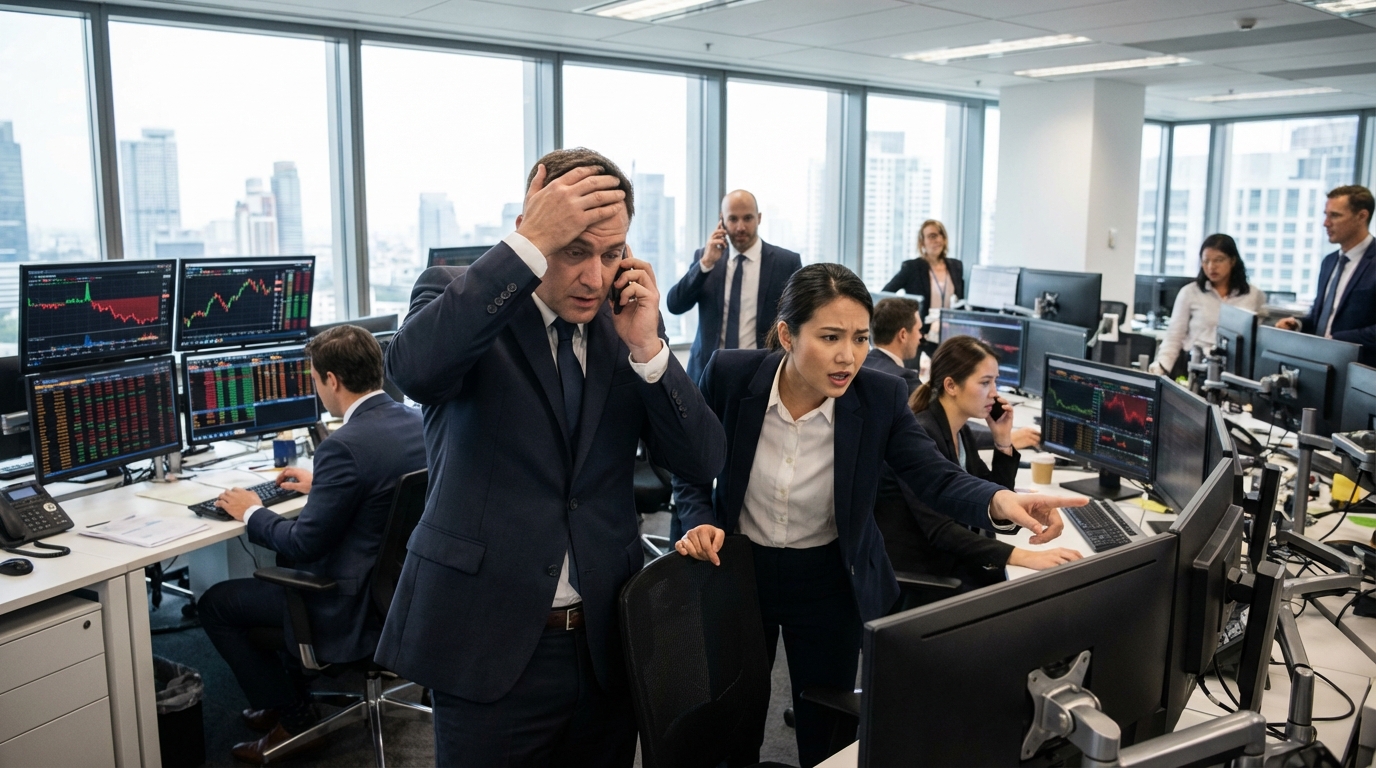
When markets plunge, the machinery behind your trades faces its ultimate test. March 2020 saw trading volumes spike 300% above normal levels at major retail brokerages, crashing platforms and leaving millions of investors unable to execute orders during the fastest market decline in history. Understanding how brokers react during market stress isn’t just academic curiosity: it directly affects whether you can access your money when you need it most.
The relationship between investors and their brokers operates on trust built during calm markets. That trust gets stress-tested when volatility explodes. Some brokerages emerge from chaos having protected their clients and systems. Others reveal critical weaknesses that cost traders real money. The difference comes down to preparation, infrastructure, and decision-making under pressure.
We’ve seen multiple market crises unfold from various vantage points, and the patterns are remarkably consistent. Brokers face the same fundamental challenges each time: overwhelming order flow, liquidity evaporation, margin call cascades, and communication breakdowns. How they handle these challenges separates the well-prepared from the vulnerable. This matters because your next trade during a crisis depends entirely on choices your broker made months or years before the panic began.
The Anatomy of Brokerage Operations in Volatile Markets
Managing Extreme Order Flow and System Latency
Normal trading days see predictable patterns. Orders flow steadily, systems hum along, and response times stay measured in milliseconds. Crisis days shatter these patterns completely. During the COVID crash, Robinhood experienced order volumes 10 times their typical daily average. TD Ameritrade reported similar spikes. These aren’t gradual increases that systems can adapt to: they hit like a wall.
The technical challenge is staggering. Every order triggers multiple downstream processes: validation, routing, matching, confirmation, and settlement preparation. Multiply each process by millions of simultaneous users, and you understand why platforms buckle. Latency that normally measures 50 milliseconds can balloon to 30 seconds or longer. For traders trying to exit positions in a falling market, those delays translate directly into losses.
Brokers respond by implementing queue management systems that prioritize certain order types. Market orders typically get priority over limit orders. Existing position liquidations may jump ahead of new position entries. These triage decisions happen automatically, governed by rules established long before the crisis hit.
Liquidity Challenges and Wide Bid-Ask Spreads
Liquidity doesn’t disappear uniformly during stress. It drains from specific instruments while pooling in others. During the 2020 crash, Treasury ETFs saw spreads widen to levels not seen since 2008. Corporate bond ETFs traded at discounts to their net asset values exceeding 5%. Even highly liquid stocks experienced moments where bid-ask spreads expanded tenfold.
Brokers must communicate these conditions to clients, but most do so poorly. The price you see on your screen during a crisis may bear little resemblance to the price you’ll actually receive. Market orders become particularly dangerous because they’ll execute at whatever price exists when they reach the front of the queue.
Smart brokers implement warnings when spreads exceed normal ranges. Some temporarily restrict market orders on affected securities, requiring limit orders instead. These protective measures frustrate traders who want immediate execution, but they prevent the worst outcomes: orders filling at prices dramatically different from expectations.
Risk Management and Margin Call Protocols
Adjusting Leverage and Margin Requirements
Brokers don’t wait for accounts to blow up before taking action. They monitor portfolio risk continuously and adjust margin requirements based on market conditions. During the 2020 volatility spike, Interactive Brokers raised margin requirements on broad market indices by 30% within 48 hours. Other brokers followed with similar increases.
These adjustments serve two purposes. First, they force traders to reduce position sizes, limiting potential losses. Second, they protect the brokerage itself from client defaults. When a trader’s losses exceed their account value, the broker becomes responsible for covering the difference. Large-scale defaults during a crisis could threaten the brokerage’s survival.
The timing of margin adjustments creates controversy. Raising requirements during a crash forces traders to sell into weakness, potentially locking in losses. But waiting too long exposes everyone to greater risk. Most brokers err toward early action, accepting client complaints as preferable to systemic failures.
Automated Liquidation Systems and Client Protection
When margin calls go unanswered, automated systems take over. These liquidation engines sell positions without human intervention, following predetermined rules about which positions to close first. The process is mechanical and unsentimental: it doesn’t care that you planned to hold that stock for retirement.
Liquidation algorithms typically start with the most liquid positions. They’ll sell your Apple shares before touching your small-cap holdings because Apple can be sold quickly without moving the market. This logic protects the broker’s ability to close positions but may not align with your investment strategy.
Some brokers provide grace periods before liquidation begins. Others start immediately once accounts breach maintenance requirements. Knowing your broker’s specific policies matters enormously: the difference between a 24-hour grace period and immediate liquidation could determine whether you survive a volatile week intact.
Regulatory Compliance and Trading Restrictions
Implementing Circuit Breakers and Trading Halts
Individual brokers don’t control market-wide circuit breakers: those come from exchanges. But brokers must implement these halts correctly and communicate them clearly. When the S&P 500 drops 7%, trading pauses for 15 minutes across all U.S. exchanges. A 13% drop triggers another pause. At 20%, markets close for the day.
Brokers face the challenge of managing client expectations during these pauses. Orders submitted during halts queue up, creating a backlog that must clear when trading resumes. The reopening often brings another wave of volatility as pent-up selling pressure meets limited buying interest.
Individual security halts present different challenges. When a specific stock gets halted due to volatility or pending news, brokers must prevent new orders while managing existing ones. The complexity multiplies when dozens or hundreds of securities halt simultaneously, as happened during several 2020 trading sessions.
Reporting Obligations to Financial Authorities
Regulators demand real-time visibility during market stress. Brokers must report unusual trading patterns, potential market manipulation, and system failures as they occur. The SEC, FINRA, and other bodies have direct communication channels that activate during crises.
These reporting requirements create administrative burden precisely when staff are most stretched. Compliance teams work around the clock during volatile periods, documenting every system issue and unusual client activity. The documentation serves multiple purposes: regulatory compliance, legal protection, and post-crisis analysis.
Brokers that fail to meet reporting obligations face significant penalties. More importantly, regulators may restrict their operations until compliance issues are resolved. This creates strong incentives for maintaining robust reporting systems even during the most chaotic conditions.
Client Communication and Advisory Strategies
Scaling Customer Support During Crises
Phone lines jam within minutes of major market moves. Email response times stretch from hours to days. Chat systems queue hundreds of customers simultaneously. The communication infrastructure that handles normal volumes collapses under crisis demand.
Sophisticated brokers maintain overflow capacity through third-party call centers and cross-trained staff from other departments. They also shift communication toward self-service options: automated status pages, FAQ updates, and mobile app notifications. These channels can reach millions of clients simultaneously without human bottlenecks.
The content of communications matters as much as their delivery. Effective crisis communication acknowledges problems directly, provides specific timelines for resolution, and offers concrete guidance. Vague reassurances frustrate clients and damage trust. Specific information, even when the news is bad, maintains credibility.
Providing Market Analysis and Sentiment Guidance
During stress events, brokers walk a careful line between helpful guidance and inappropriate advice. They can provide factual market analysis: what’s happening, historical context, technical conditions. They cannot tell individual clients what to do with their specific portfolios.
Research teams at major brokerages work overtime during crises, producing rapid analysis of developing situations. These reports help clients understand context but stop short of recommendations. The distinction matters legally and ethically: brokers who cross into advice territory assume liability for outcomes.
Some brokers host webinars or conference calls during extended volatility periods. These sessions let clients hear directly from analysts and executives, providing reassurance through human connection. The format also allows real-time Q&A, addressing specific concerns that written communications miss.
Technological Resilience and Infrastructure Scalability
Cloud Bursting and Server Capacity Management
Modern brokerages don’t rely solely on fixed server capacity. They use cloud infrastructure that can expand automatically when demand spikes. This “cloud bursting” capability lets platforms handle ten times normal volume without pre-purchasing that capacity.
The challenge lies in how quickly systems can scale. Spinning up additional cloud capacity takes time: seconds to minutes depending on configuration. During the fastest-moving market moments, even brief delays create problems. Brokers must balance the cost of maintaining excess capacity against the risk of scaling delays.
Testing these systems under realistic conditions proves difficult. You can simulate high volume, but you cannot perfectly replicate the chaos of an actual crisis. Some brokers discovered their scaling systems worked in testing but failed during real events because the test conditions didn’t capture all variables.
Cybersecurity Threats During Market Chaos
Attackers love market chaos. While broker staff focus on handling volume and client complaints, security monitoring may receive less attention. Sophisticated attackers time their intrusions to coincide with market stress, knowing defenders are distracted.
Distributed denial-of-service attacks become particularly damaging during volatility. These attacks flood systems with fake traffic, making it impossible for legitimate users to connect. During a crisis, clients cannot distinguish between system overload and active attack. Both produce the same result: inability to trade.
Brokers maintain security operations centers that operate independently from trading operations. These teams don’t get pulled into volume management: their sole focus remains threat detection and response. This separation ensures security doesn’t become a crisis casualty.
Long-term Brokerage Evolution After Stress Events
Every major market crisis produces a wave of brokerage improvements. The 2010 Flash Crash led to circuit breaker reforms. The 2020 COVID crash accelerated infrastructure investments across the industry. Brokers that survived difficult periods often emerge stronger, having identified and fixed weaknesses.
Post-crisis analysis typically reveals predictable patterns. Systems that seemed adequate proved insufficient. Communication plans that looked comprehensive had gaps. Staff training that covered normal scenarios didn’t prepare teams for extreme conditions. These findings drive investment in resilience.
The competitive landscape shifts after stress events. Brokers that performed well gain market share as clients flee from those that failed. Reputation effects persist for years: traders remember which platforms crashed and which remained stable. This market pressure creates strong incentives for continuous improvement.
Choosing a broker based solely on commissions or features misses the bigger picture. The broker’s behavior during market stress affects your financial outcomes more than small fee differences. Before the next crisis hits, examine your broker’s track record during previous volatile periods. Read reviews from those specific dates. Check whether they’ve invested in infrastructure since then.
Your ability to react during the next market panic depends entirely on decisions your broker has already made. Choose accordingly.
Disclaimer: This content is for educational purposes only and not to be construed as investment advice. Remember that forex and CFD trading involves high risk. Always do your own research and never invest what you cannot afford to lose.
Share this article!


Recent News
How to Compare Trading Platforms When You Are Based in the Gulf: Costs, Regulation and Access to UK and US Markets

How to check your credit score in the UAE
How Many Free Zones in Dubai? and Why It Barely Matters
Featured
No reviews found.
No reviews found.



No reviews found.
No reviews found.